


Hygiene and Epidemiology · Year 3 · Medical University of Sofia

01

Introduction to environmental health and hygiene

Free notes for topic 01 of the Hygiene and Epidemiology syllabus, open without an account. Written by a senior student against the syllabus question and checked line by line by a second student before publishing. How content is made

Updated

Summary

note

  • Hygiene is the conditions or practices that maintain health and prevent disease, especially through cleanliness.
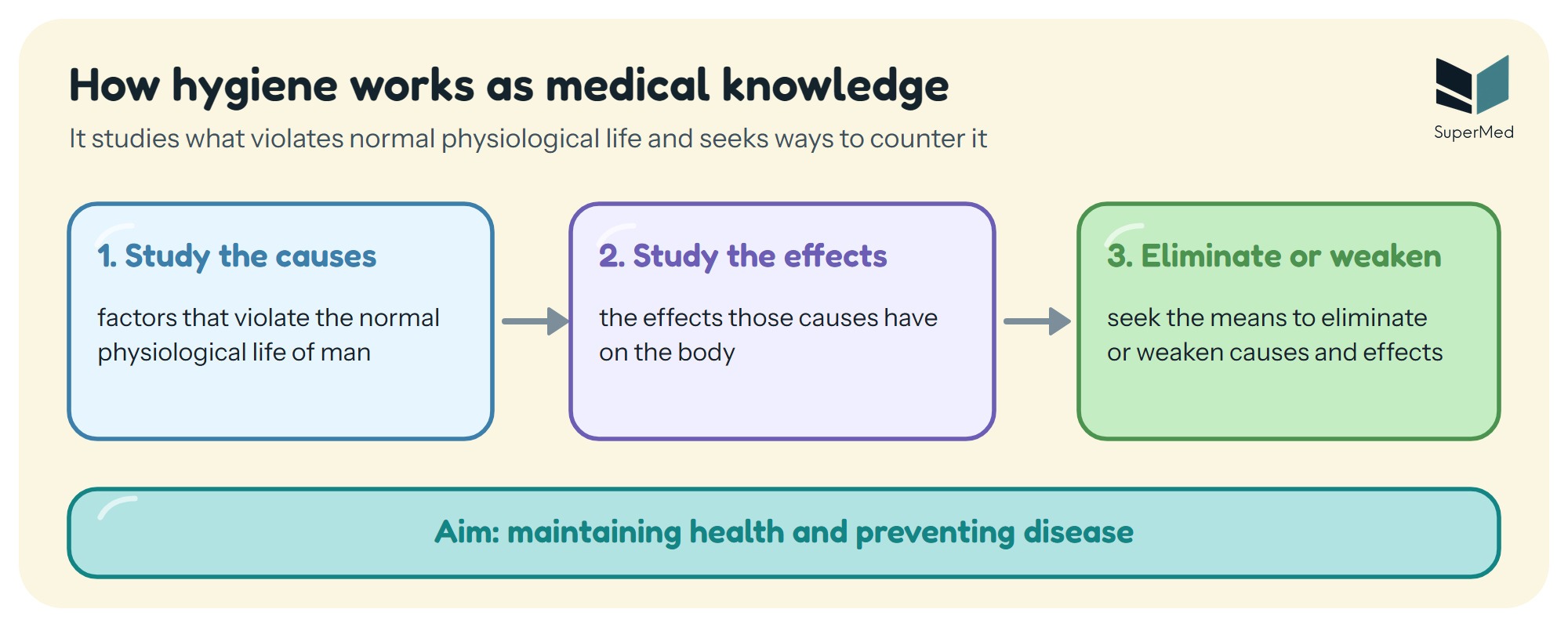
  • Hygiene is a main prophylactic branch of medicine. It studies the causes and effects that violate the normal physiological life of humans and seeks ways to eliminate or weaken them.
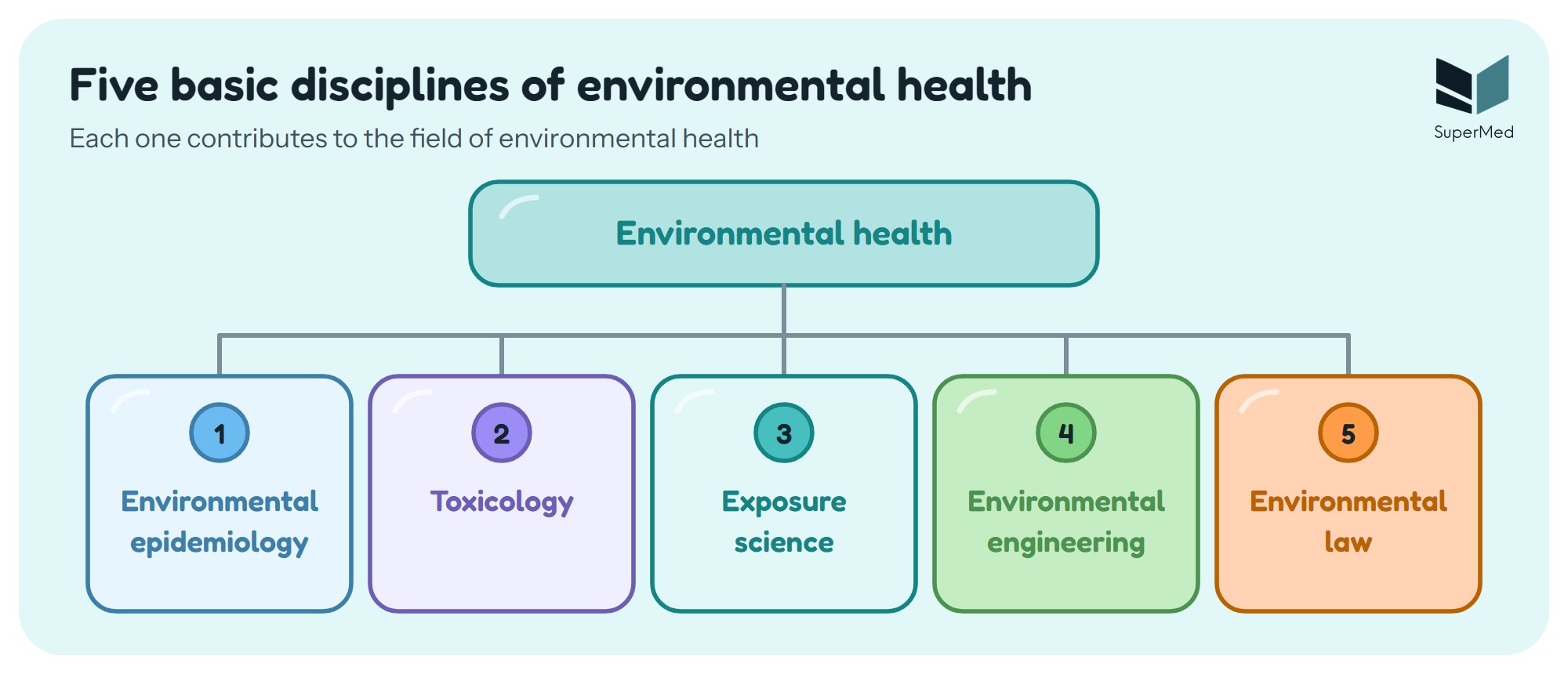
  • Environmental health draws on five basic disciplines: environmental epidemiology, toxicology, exposure science, environmental engineering and environmental law.
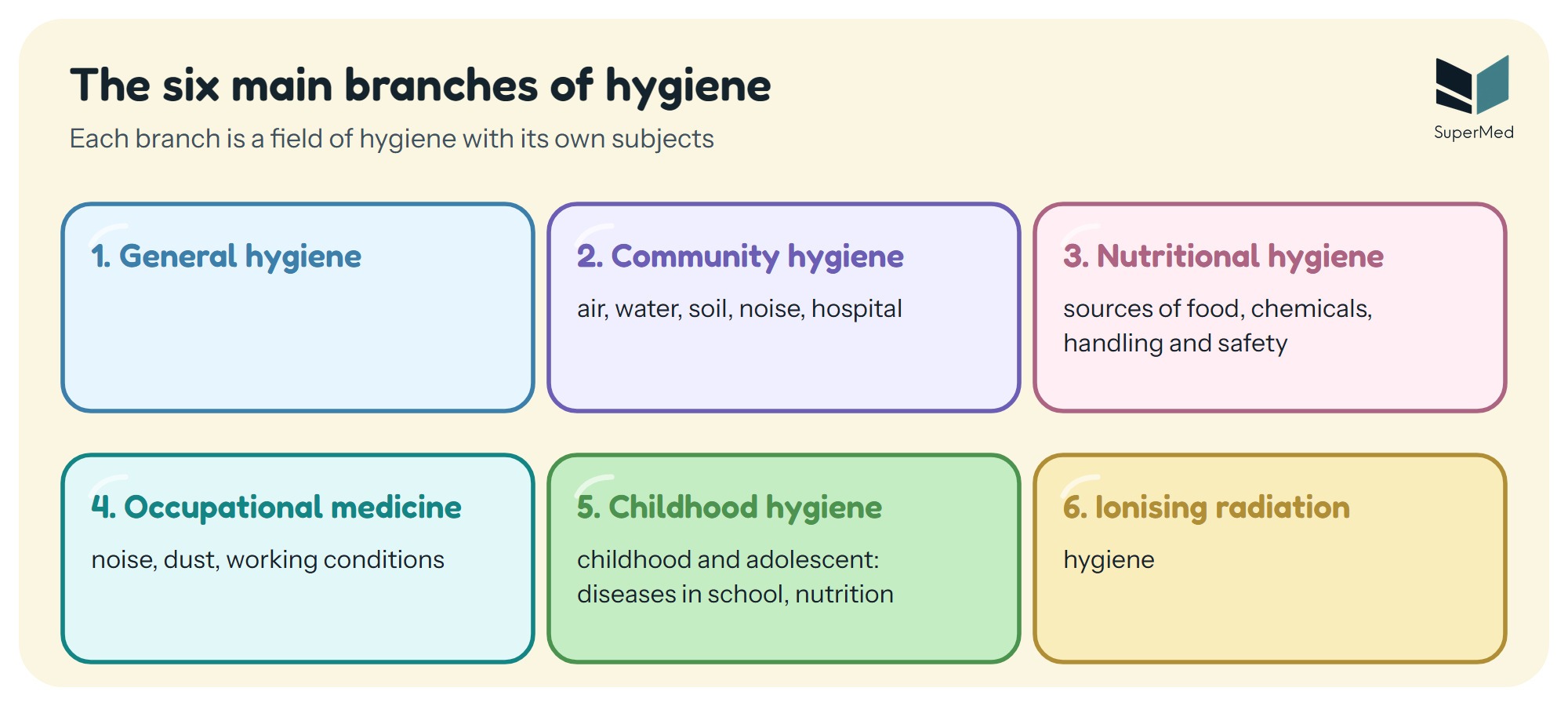
  • Hygiene has six main branches: general hygiene, community hygiene, nutritional hygiene, occupational medicine, childhood and adolescent hygiene, and ionising radiation hygiene.
  • Medical ecology is the science that defines the aspects of the environment with a direct bearing on human health.
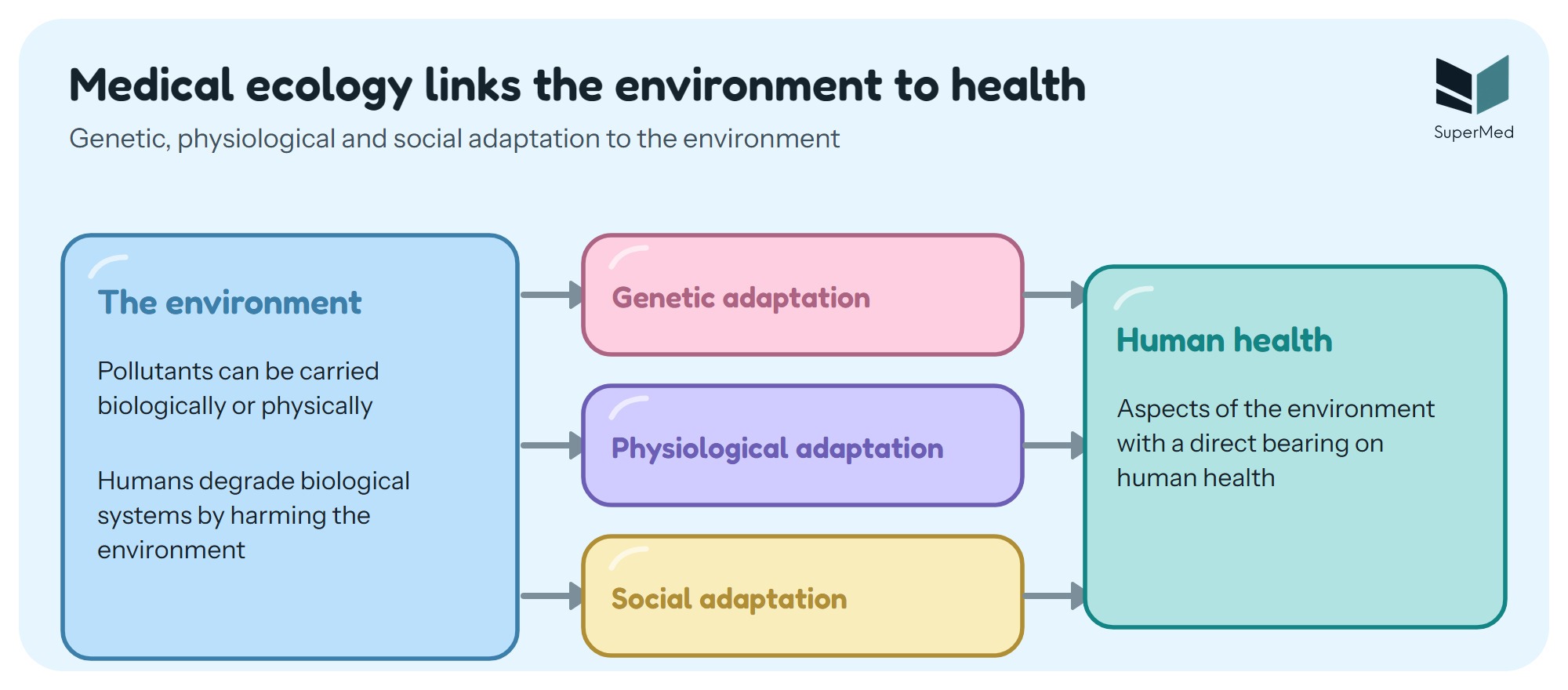
  • Humans adapt to the environment genetically, physiologically and socially.
  • Humans damage biological systems by degrading the environment, and pollutants can be carried through the environment biologically or physically.
1. Introduction to environmental health and hygiene

note

This topic introduces the field of environmental health, which concerns how the environment affects human health. It is one of the main areas that hygiene covers, and it sits alongside the other disciplines in this course.

Health and hygiene

Health is the science, practice and study of human wellbeing, of keeping people healthy and preventing illnesses and human injuries.

Hygiene is the conditions or practices that are conducive to maintaining health and preventing disease, especially through cleanliness.

Hygiene is also the medical knowledge that studies the causes and effects that violate the normal physiological life of humans, and seeks the means for their elimination or weakening. This is the point at which hygiene becomes a branch of medicine, covered in section 2.

The five basic disciplines of environmental health

Schematic: Environmental health at the top, with five cards below: 1 Environmental epidemiology, 2 Toxicology, 3 Exposure science, 4 Environmental engineering, 5 Environmental law

The five disciplines that contribute to environmental health are:

  • Environmental epidemiology
  • Toxicology
  • Exposure science
  • Environmental engineering
  • Environmental law

2. Hygiene as a main prophylactic branch in medicine

note

Hygiene is one of the main prophylactic branches of medicine. Prophylaxis means preventing disease rather than treating it after it has appeared.

Aim of hygiene

Hygiene studies how causes and effects disturb normal physiological life, and it looks for means to deal with them. The work follows three steps, and its aim is set out in the diagram.

Schematic: three cards in a row, 1 Study the causes, 2 Study the effects, 3 Eliminate or weaken, with an arrow between each, and a band below: Aim: maintaining health and preventing disease

The aim is to maintain health and prevent disease. Conditions and practices that support health are the subject of the field.

StepWhat it covers
1. Study the causesFactors that violate the normal physiological life of humans
2. Study the effectsThe effects those causes have on the body
3. Eliminate or weakenMeans for their elimination or weakening

The six main branches of hygiene

Hygiene is divided into six main branches. Each covers its own subjects.

Schematic: six cards in two rows: 1 General hygiene, 2 Community hygiene (air, water, soil, noise, hospital), 3 Nutritional hygiene (sources of food, chemicals, handling and safety), 4 Occupational medicine (noise, dust, working conditions), 5 Childhood hygiene (childhood and adolescent: diseases in school, nutrition), 6 Ionising radiation hygiene
No.BranchSubjects named in the lecture notes
1General hygienenot further specified
2Community hygieneair, water, soil, noise, hospital
3Nutritional hygienesources of food, chemicals, handling and safety
4Occupational medicinenoise, dust, working conditions
5Childhood and adolescent hygienediseases in school and nutrition
6Ionising radiation hygienenot further specified

3. Medical ecology

note

Medical ecology is an emerging science. It defines those aspects of the environment that have a direct bearing on human health.

Human adaptation and the environment

Medical ecology looks at how people adapt to their surroundings. The adaptation can be:

  • Genetic, carried in inherited characteristics
  • Physiological, in the way the body functions
  • Social, in the way people live and organise themselves
Schematic: a left card, the environment, with arrows to three adaptation cards (genetic, physiological, social) and then to a right card, human health

Humans and the environment

Humans contribute to the destruction of biological systems through the degradation of the environment. Pollutants can be transported through the environment, either biologically or physically. For this reason medical ecology pays attention to the environment as a whole, not only to the places where people live.

4. Key facts and comparison tables

note

The terms in this topic are summarised below.

TermMeaning in this topic
HealthThe science, practice and study of human wellbeing, and of preventing illness and injury
HygieneConditions or practices that maintain health and prevent disease, especially through cleanliness
Environmental healthThe field to which five basic disciplines contribute
Medical ecologyThe science that defines the aspects of the environment that bear directly on human health
ProphylaxisPrevention of disease

All 21 Hygiene and Epidemiology topics · exam study support, not clinical guidance. SuperMed is not affiliated with the Medical University of Sofia.

Start free. No card needed.

Every account starts free, with Medical Ethics, Urology and Computer Science open in full and free topics in Cytology, Latin Language, Medical Chemistry, Medical Physics, Medical Biology, Anatomy, Biophysics, Medical Psychology, MCS (Disaster Medicine), Physiology, Biochemistry, Social Medicine, Medical Genetics, Pharmacology, Pathophysiology, Microbiology, Internal Medicine, Nephrology, Cardiology, Pulmonology, Gastroenterology, Internal Medicine (Clinical), Obstetrics and Gynecology, Physiotherapy and Rehabilitation, Dental Materials, Preclinics of Prosthetic Dental Medicine, Medical Psychology (Dental Medicine), SMME (Social Medicine & Medical Ethics), Preclinics of Pediatric Dental Medicine, Hygiene and Epidemiology, General Surgery, Preclinics of Conservative Dental Medicine, Preclinics of Oral and Maxillofacial Medicine, Dental Public Health, Dental Prophylaxis, Diagnostic Imaging, Dental Allergology, Dental Implantology, Physiotherapy, Cytology & Histology, Medical Chemistry, Medical Physics, Anatomy I, Biophysics and Medical Biology. Super opens the rest. Super is €14.99 a month.

Create a free account