


Summary
note
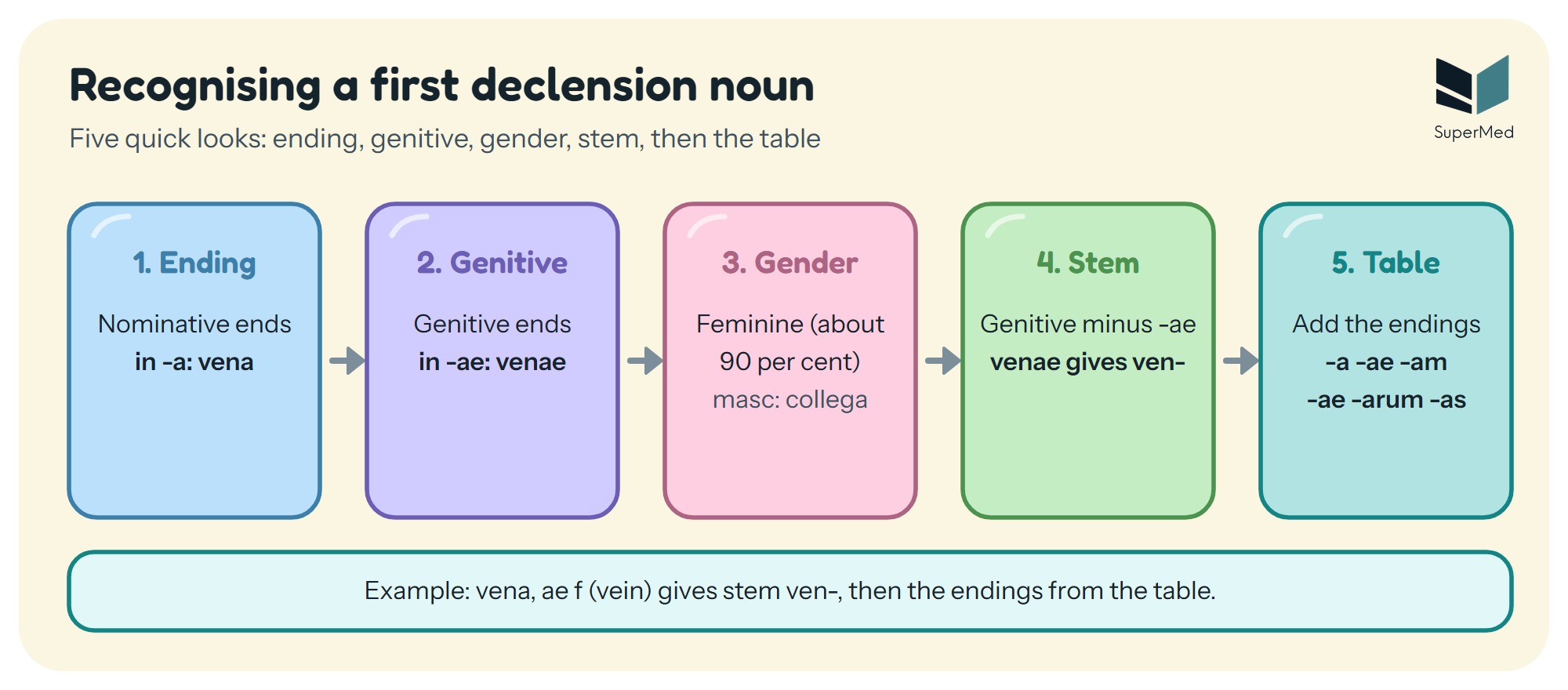
The first declension is the a-declension: its nouns have the stem vowel -a. Learn these ten points first.
- The dictionary form ends in -a and the genitive singular ends in -ae. Both tell you that a noun belongs to the first declension.
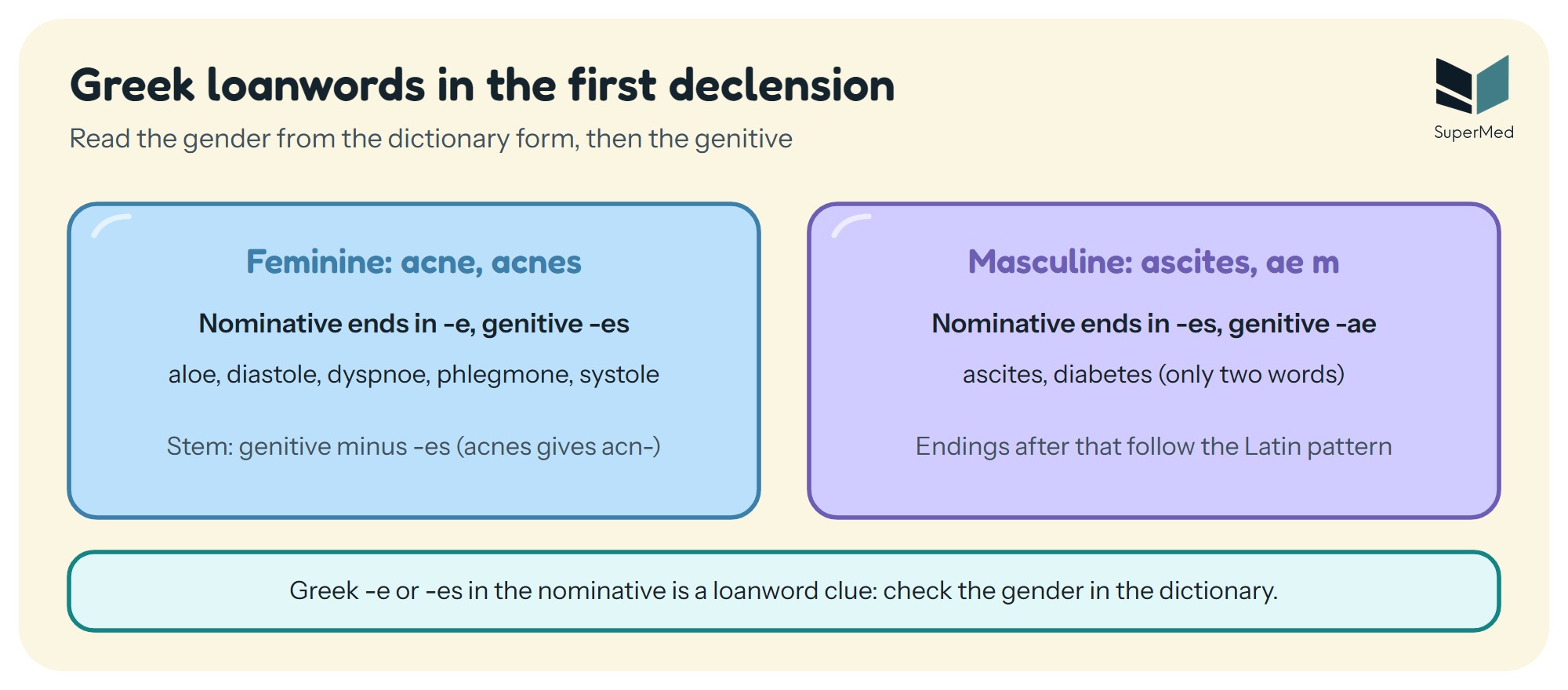
- About 90 per cent of first declension nouns are feminine. A few are masculine, such as collega, ae m (colleague) and the Greek words ascites and diabetes.
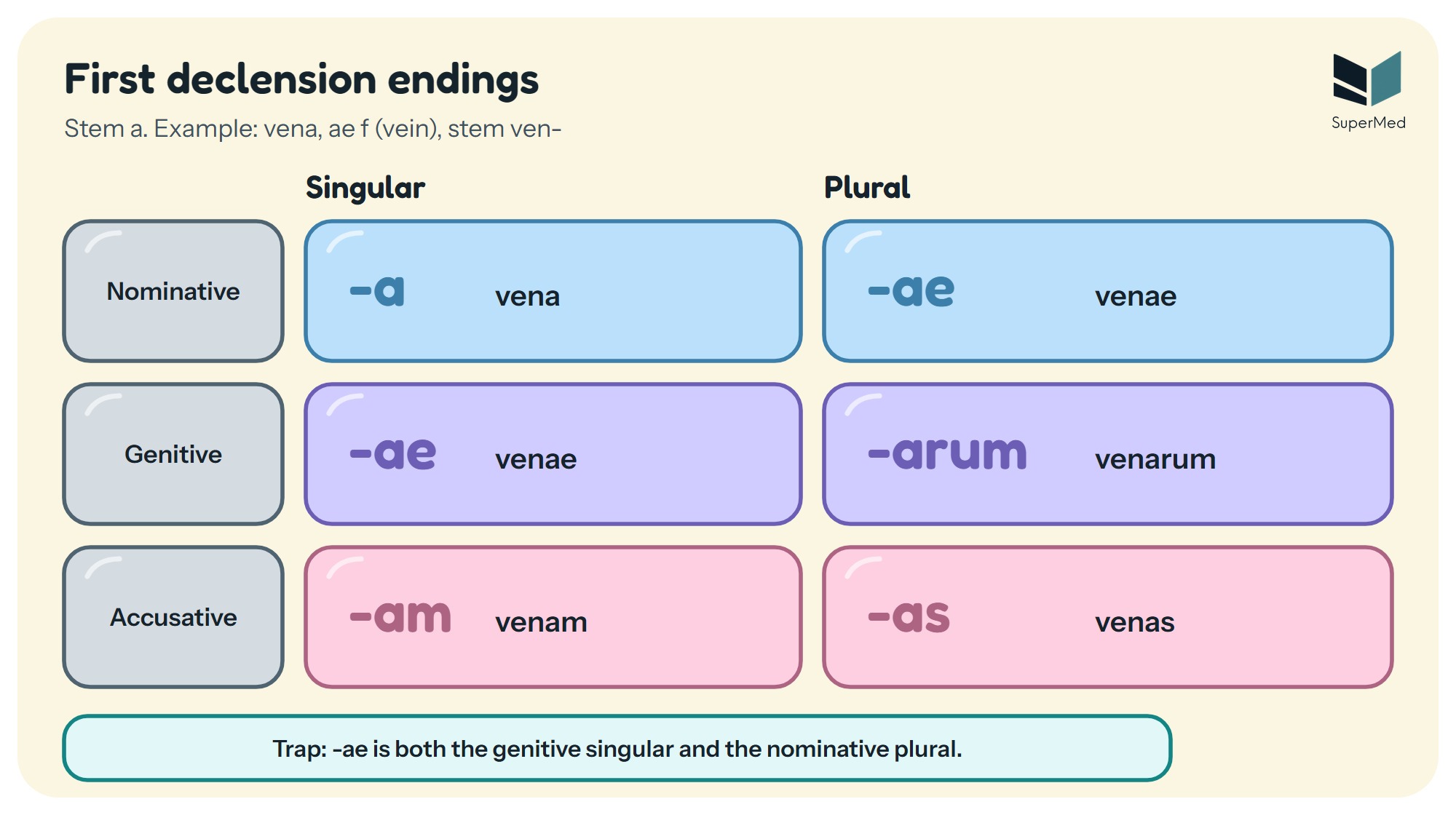
- Singular endings: nominative -a, genitive -ae, accusative -am.
- Plural endings: nominative -ae, genitive -arum, accusative -as.
- The same spelling -ae is the genitive singular and the nominative plural. Decide the number from the sentence, not from the spelling.
- The stem is the genitive minus -ae: vena, ae f (vein) has the stem ven-.
- Greek loanwords in the first declension have a nominative in -e (acne) with genitive -es (acnes), or a masculine nominative in -es (ascites) with genitive -ae.
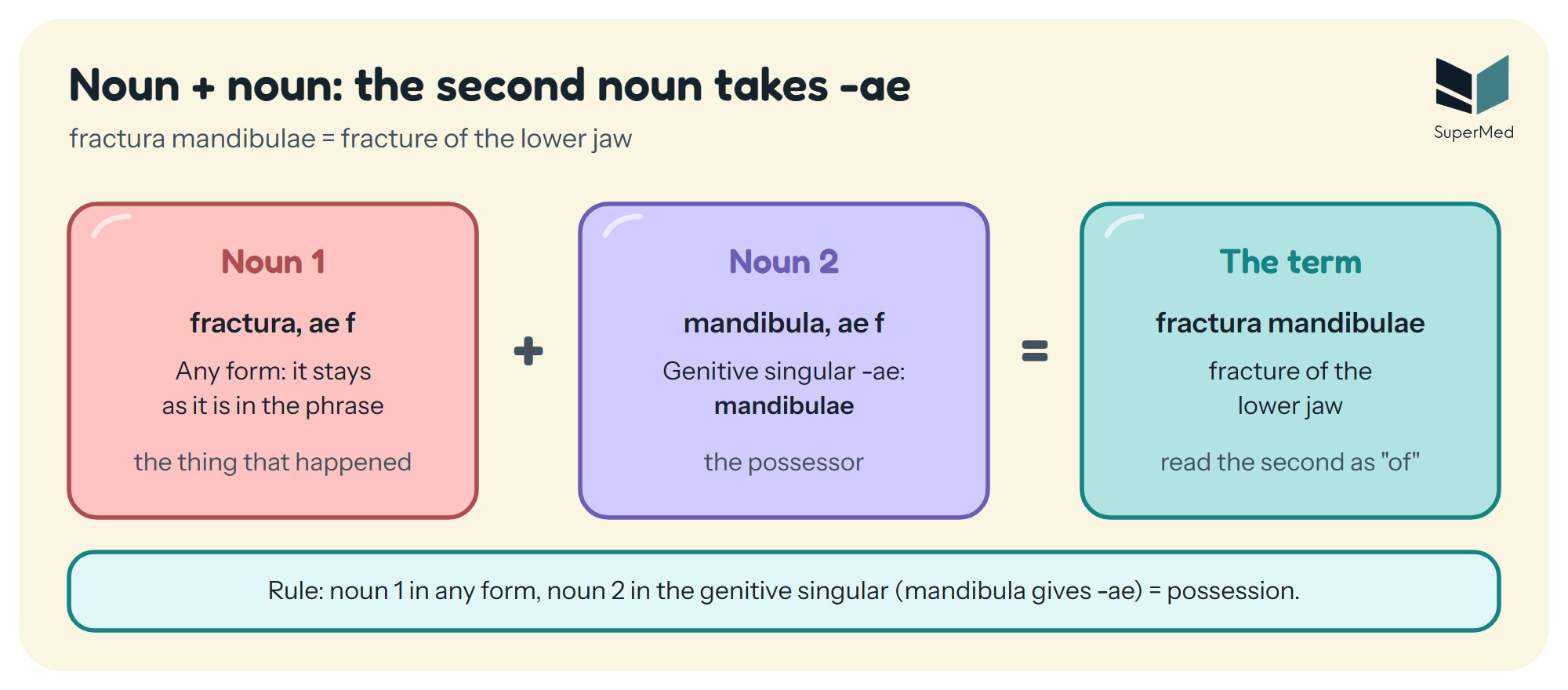
- In a noun + noun term, the second noun goes into the genitive singular: fractura mandibulae = fracture of the lower jaw. The first noun does not change.
- An adjective in the feminine nominative singular -a (acutus, a, um gives acuta) also belongs to the first declension and agrees with its noun: anaemia acuta = acute anaemia.
- Read every term by substitution and practise until you know the meaning without the table.
| Case | Singular | Plural | Example: vena, ae f (vein) |
|---|---|---|---|
| Nominative | -a | -ae | vena, venae |
| Genitive | -ae | -arum | venae, venarum |
| Accusative | -am | -as | venam, venas |