


The short version
note
- Medical genetics studies how inherited variation in the genome causes, modifies and predicts disease, and how that knowledge is used in diagnosis, treatment and prevention.
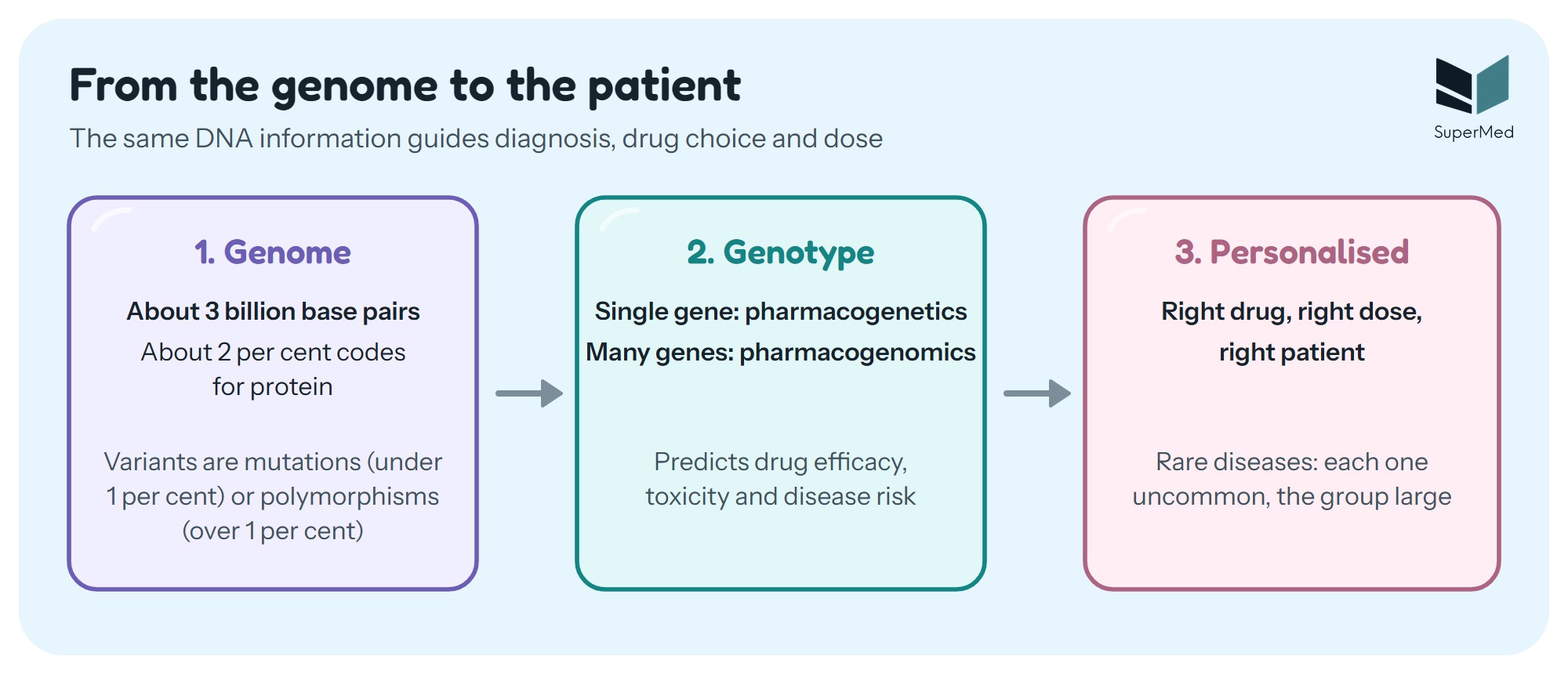
- The human genome has about 3 billion base pairs. Only about 2 per cent codes for protein; the rest regulates gene expression and maintains genomic stability.
- Personalised medicine chooses prevention, diagnosis and treatment on the basis of each patient's genetic and non-genetic profile.
- A rare disease affects a small proportion of the population. Rare diseases are collectively common: there are more than 6,000 known, and together they affect a large number of people.
- The Human Genome Project, completed in the early 2000s, sequenced the human genome and set the basis for genomic medicine: predicting drug response, improving diagnosis and detecting predisposition early.
- Pharmacogenetics studies variation in a single gene that alters drug response; pharmacogenomics studies variation across many genes or the whole genome.
Exam tip: be ready to define medical genetics, pharmacogenetics versus pharmacogenomics, a mutation versus a polymorphism, and the aims of the Human Genome Project.