


Summary
note
Social medicine is the branch that studies the social causes of health and disease. Textbooks differ on where it sits: some call it a scientific branch of medicine, others a specialisation within the field of sociology. Both agree on its job.
- Social medicine is a scientific discipline that studies how social conditions affect health, and aims to improve public health through prevention and policy. This is sz's one-sentence definition, word for word in the Common exam questions section below.
- It studies the relationship between medicine and public health, the social factors in aetiology (the cause of disease), and the prevalence and interpretation of disease in society.
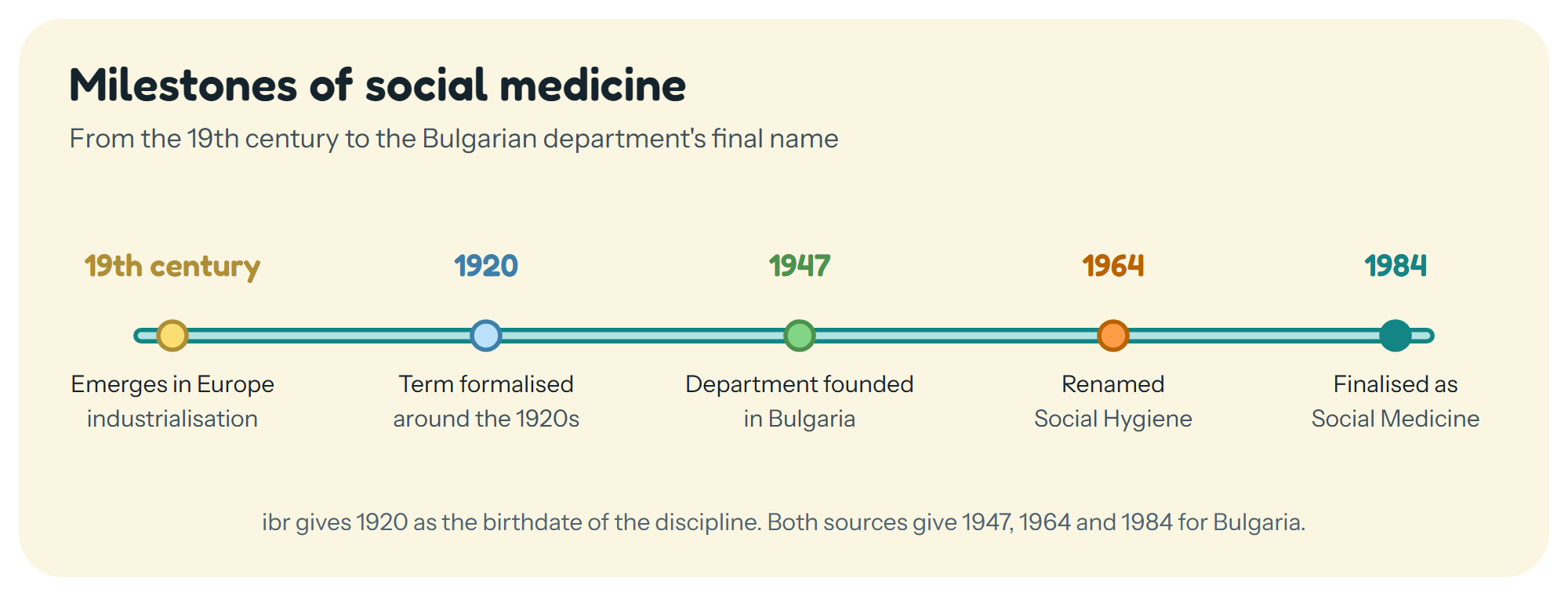
- It emerged in 19th-century Europe, when industrialisation and poor living and working conditions were seen as the root causes of disease.
- Rudolf Virchow, Salvador Allende and Alfred Grotjahn are the key early contributors. Virchow is often named as the founder.
- The term "social medicine" became formalised around the 1920s; ibr gives 1920 as the birthdate of the discipline.
- In Bulgaria the department was founded in 1947, renamed Social Hygiene in 1964 and finalised as Social Medicine in 1984.
- After the Second World War, national health systems, preventive public health policies and community-based care grew.
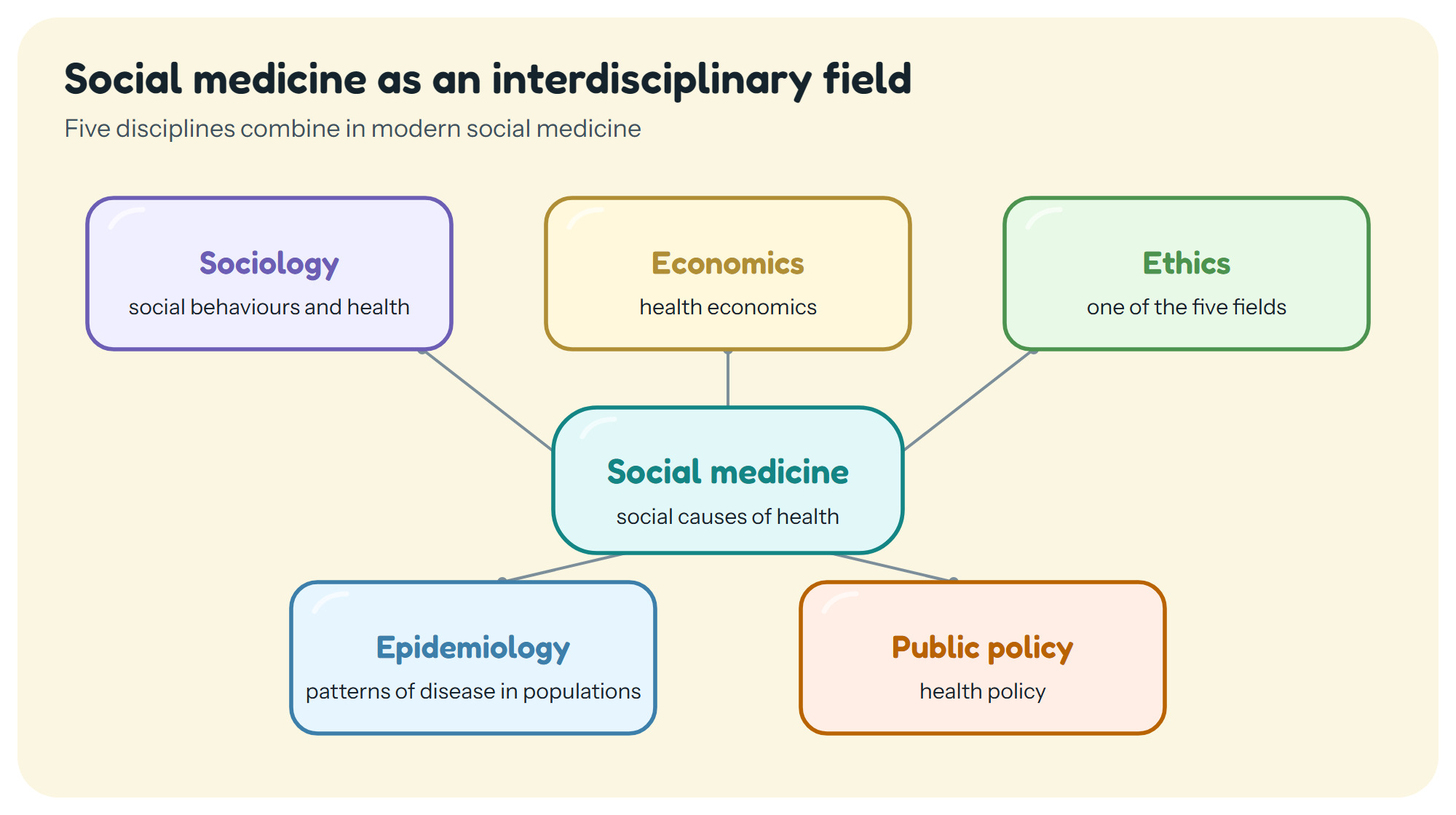
- Social medicine is now interdisciplinary, drawing on sociology, economics, ethics, epidemiology and public policy.
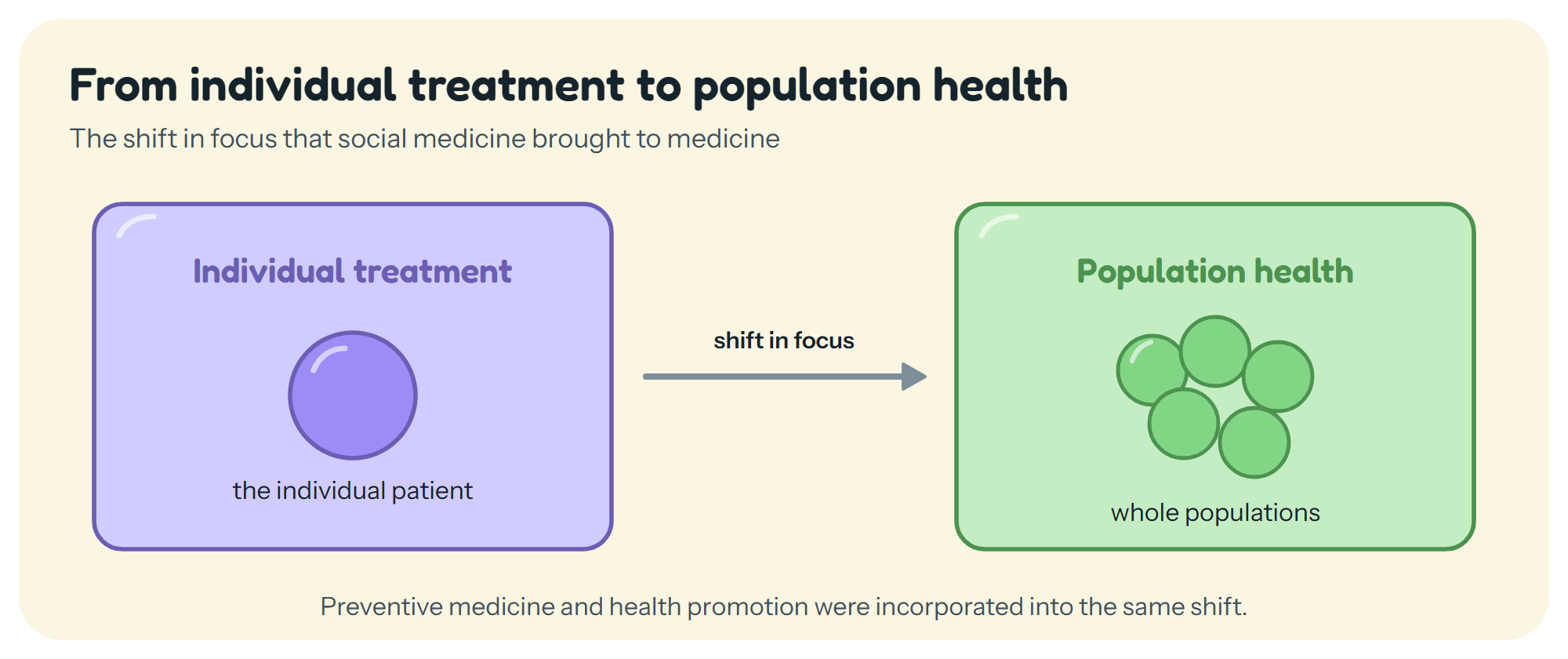
- It shifted the focus from individual treatment to population health, and it produced tools such as health indicators, health economics and equity monitoring frameworks.