


Biochemistry · Year 2 · Medical University of Sofia

01

Contemporary Biochemistry - basis for understanding metabolism in health and disease

Free notes for topic 01 of the Biochemistry syllabus, open without an account. Written by a senior student against the syllabus question and checked line by line by a second student before publishing. How content is made

Updated

Summary

note

  • Biochemistry is the study of all living things, from viruses to humans, at the molecular level. It applies chemistry to biological processes at the cellular and molecular level.
  • It investigates the structure and function of cell components, the chemical reactions that take place in the cell and their regulation, and the importance of these processes for the organism in health and in pathology.
  • Medical Biochemistry is the basis for understanding metabolism in health and disease. It lets us keep health through appropriate diet and physical activity (preventive medicine) and treat diseases effectively.
  • Biochemistry and the other biomedical disciplines advance each other. The sickle cell haemoglobin story is the standard example.
  • Biochemical investigations are critical for diagnosis, prognosis and treatment. Two examples: inherited galactosemia (mechanism, treatment, screening) and myocardial infarction (the time course of the enzymes CK, AST and LDH in serum).
1. Subject, objectives and scope of Biochemistry

note

What is the subject of Biochemistry?

Biochemistry is the study of all living things, from viruses to humans, at the molecular level. In other words, it is the application of chemistry to the study of biological processes at the cellular and molecular level, so biochemistry combines biology and chemistry to study living matter.

Biochemistry investigates:

  • the structure and function of the cell components;
  • the chemical reactions and processes that take place in the cell, and their regulation;
  • the importance of these processes for the organism, both in health and in pathology.

It helps us understand the chemical side of many biological processes, for example digestion, respiration, reproduction, excretion, the behaviour of hormones, and the contraction and relaxation of muscles. It therefore plays a vital role in health and nutrition.

Metabolism

Metabolism is the term for the chains of reactions that break down or build up chemical products. The rate of these reactions is the metabolic rate. Metabolism can be catabolic (breaking down) or anabolic (building up).

Objectives: why Medical Biochemistry

Medical Biochemistry is the basis for understanding metabolism in health and disease. Its knowledge provides us with:

  1. understanding and keeping our health through appropriate diet and physical activity (also called preventive medicine);
  2. understanding and effective treatment of diseases.

2. Scope: the role of Medical Biochemistry in the development of medicine

note

Advances in biochemistry help medicine in many ways:

  • Studies of carbohydrate metabolism: management of diabetes.
  • Lipid metabolism: dealing with atherosclerosis.
  • Nucleic acid metabolism: genetic (inherited) diseases.
  • From enzymology: competitive inhibitors and antimetabolites are used as drugs in pharmacology (for example, in gout the production of uric acid can be inhibited), and many toxins act by affecting enzyme activity.
  • Signal transduction: understanding it helps to manage oncogenesis (the development of cancer).

The examples are not exhaustive.

3. Relationship between Biochemistry and other biomedical disciplines stimulates mutual advances

note

Two major concerns of workers in the health sciences, particularly physicians, are the understanding and maintenance of health and the understanding and effective treatment of diseases. Biochemistry has an enormous impact on both of these fundamental concerns of medicine, and both aim to maintain health and find effective treatment of disease.

Biochemistry also makes significant contributions to cell biology, physiology, microbiology, immunology, pharmacology and toxicology, and to the fields of inflammation, cell injury and cancer. This close relationship shows that life depends on biochemical reactions and processes.

The advance goes in both directions: biochemical studies have illuminated many aspects of health and disease, and conversely the study of health and disease has opened up new areas of biochemistry and medicine.

Example: sickle cell haemoglobin

  • Knowledge of protein structure and function was necessary to elucidate the single biochemical difference between normal and sickle cell haemoglobin.
  • In the other direction, analyses of sickle cell haemoglobin contributed significantly to our understanding of the structure and function of both normal haemoglobin and other proteins.

4. Biochemical investigations are necessary for diagnosis, prognosis and therapy

note

Biochemical investigations are critical for the diagnosis, prognosis and treatment of each disease. There are four uses, each with an example:

  1. understanding the mechanism of the disease (inherited galactosemia);
  2. choosing treatment based on the biochemical mechanism of the disease (galactosemia again);
  3. biochemical findings help the diagnosis (myocardial infarction);
  4. biochemical findings help to follow up the disease (glycated haemoglobin in diabetes).

Example 1: galactosemia, the mechanism

note

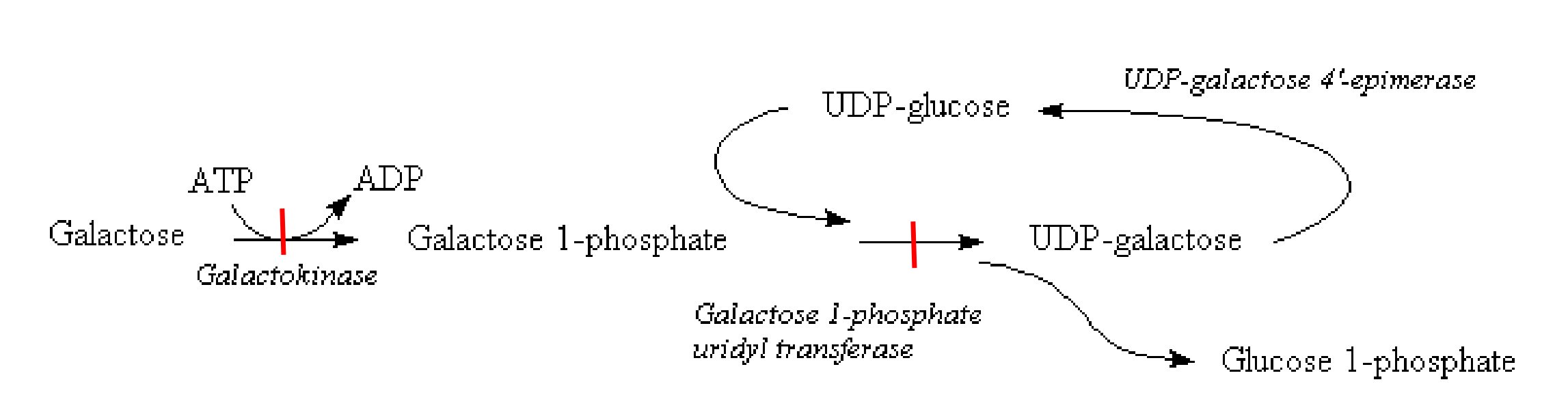
Galactose needs to be turned into glucose to be correctly metabolised. This is done in a short pathway: galactokinase converts galactose to galactose 1-phosphate (using ATP), then galactose 1-phosphate uridyl transferase (GALT) uses UDP-glucose to convert galactose 1-phosphate to UDP-galactose and glucose 1-phosphate, and UDP-galactose 4'-epimerase regenerates UDP-glucose from UDP-galactose.

Galactose metabolism: galactose to galactose 1-phosphate by galactokinase (ATP to ADP), galactose 1-phosphate plus UDP-glucose to UDP-galactose and glucose 1-phosphate by galactose 1-phosphate uridyl transferase, UDP-galactose back to UDP-glucose by UDP-galactose 4'-epimerase; the galactokinase and transferase steps are marked with red bars as the two blocks

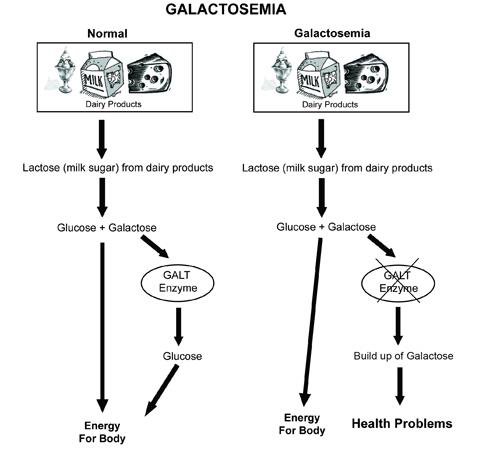
If the enzyme GALT is not present, galactose and galactose 1-phosphate accumulate. In galactosemia (high concentrations of galactose in the blood) these higher concentrations are toxic for the brain and other organs and the baby may die. Lactose (milk sugar) from dairy products is split into glucose and galactose: the glucose goes on to give energy for the body in both normal and affected babies, but in galactosemia the galactose cannot be converted to glucose by GALT, builds up and causes health problems.

Galactosemia compared with normal: dairy products, lactose, glucose plus galactose; in the normal child galactose passes through the GALT enzyme to glucose and energy for the body, in galactosemia the GALT enzyme is crossed out, galactose builds up and gives health problems

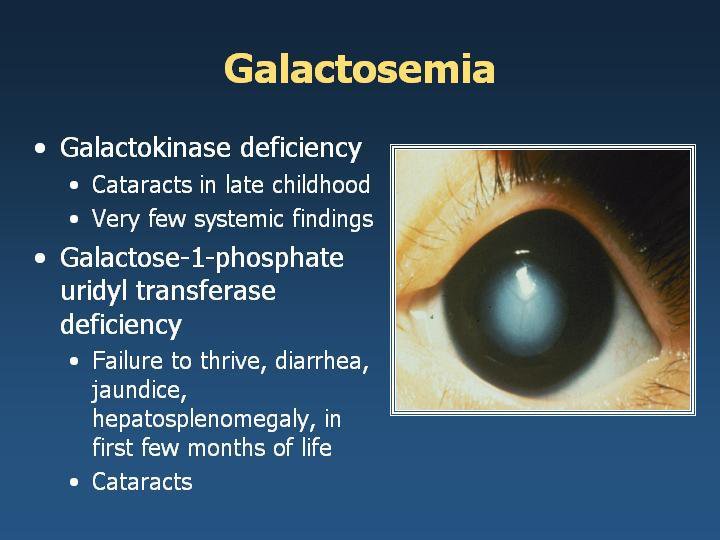
Galactokinase deficiency

  • Cataracts in late childhood.
  • Very few systemic findings.

Galactose-1-phosphate uridyl transferase deficiency

  • Failure to thrive, diarrhoea, jaundice and hepatosplenomegaly in the first few months of life.
  • Cataracts.
Galactosemia: a lens opacity (cataract) in an eye, with the findings of galactokinase deficiency and of galactose-1-phosphate uridyl transferase deficiency listed beside it

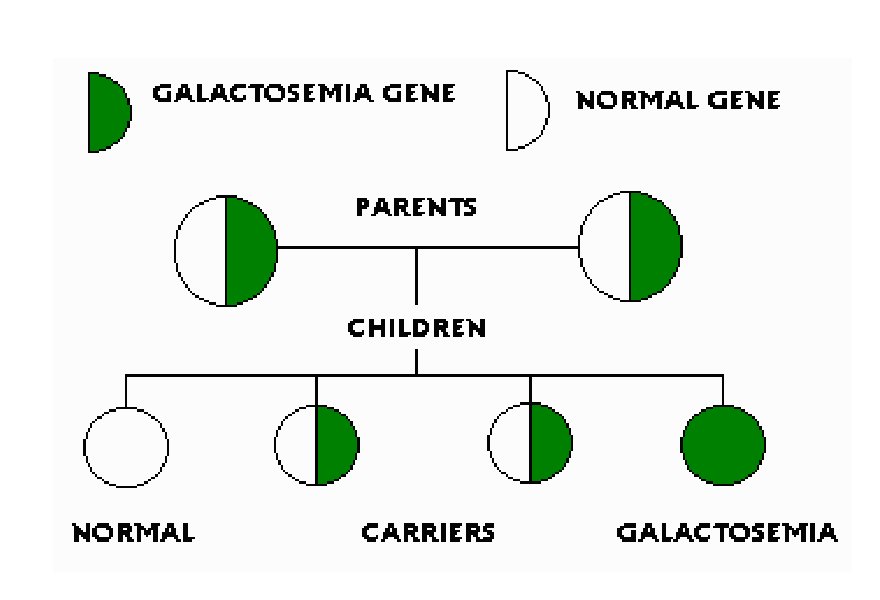
Galactosemia is an autosomal recessive disorder: the child is affected only when both copies of the gene are defective. Two carrier parents have, on average, a normal child, two carrier children and one child with galactosemia.

Autosomal recessive inheritance of galactosemia: two carrier parents (one galactosemia gene, one normal gene each) and four children: normal, carrier, carrier and galactosemia

Example 1 (continued): galactosemia, treatment and screening

note

Treatment is chosen from the biochemical mechanism of the disease. In patients with galactosemia lactose (which consists of glucose and galactose) must be removed from the diet. Babies need to be given specialised milk without galactose instead of mother's milk. The only way to manage galactosemia is to eliminate lactose and galactose from the diet completely.

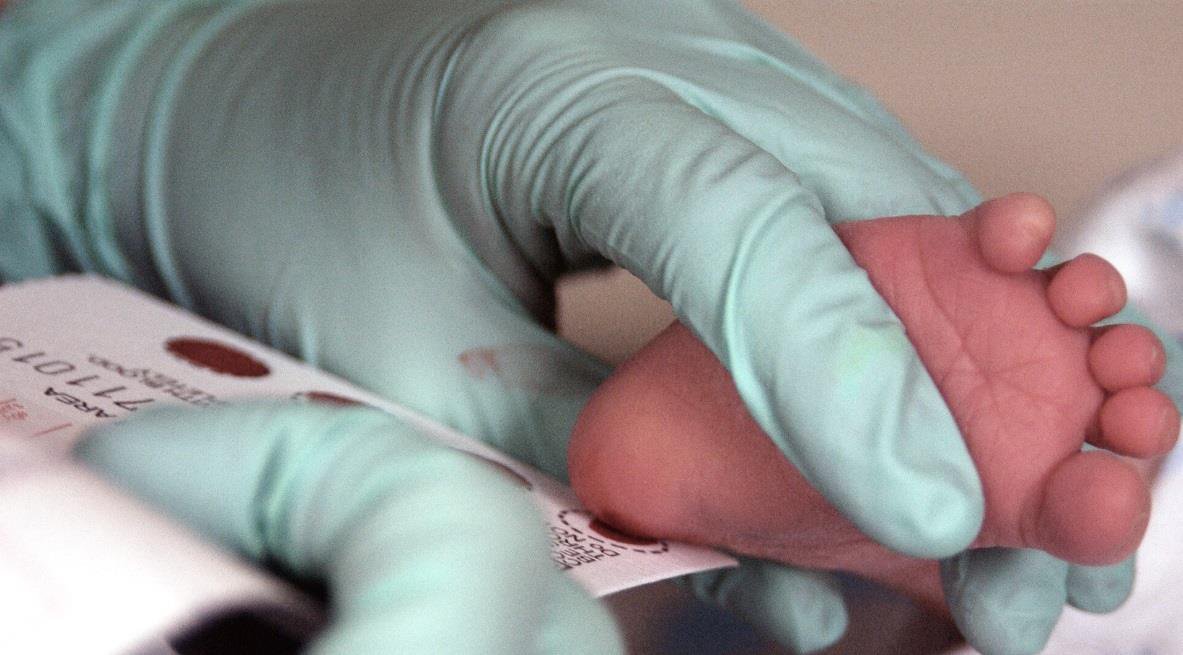
The disease is picked up by neonatal screening, in which a few drops of blood from the baby's heel are collected on a card and tested.

Neonatal screening: blood spots collected from a newborn's heel onto a filter card by a gloved hand

Example 2: myocardial infarction

note

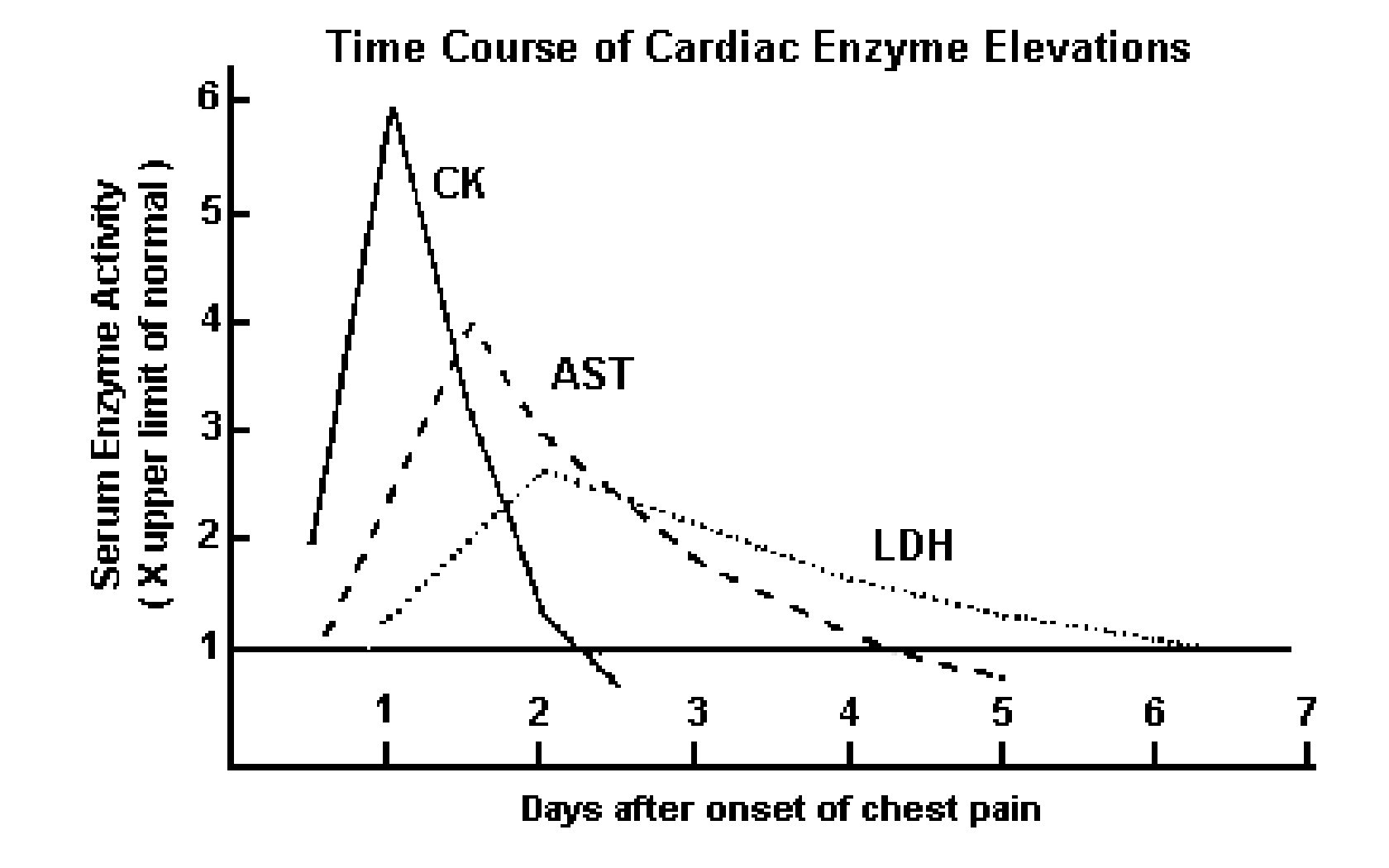
Biochemical findings help the diagnosis. We can do biochemical screening to identify patients who are having or have had a heart attack, by measuring three enzymes in the serum: CK (creatine kinase), AST (aspartate aminotransferase) and LDH (lactate dehydrogenase). They appear in the blood because, as the heart gets hypoxic, heart cells are damaged, die by necrosis and release these enzymes.

  • CK is the first to peak, within the first few hours (the graph shows its peak at about day 1, around 6 times the upper limit of normal).
  • AST peaks next, within the first few days (about 4 times the upper limit, around day 1.5 to 2).
  • LDH peaks last, later in the week (about 2.5 times the upper limit at day 2) and stays raised the longest, to about day 6 to 7.

Using the half-life of these enzymes we can work out exactly when the myocardial infarction took place.

Time course of cardiac enzyme elevations: serum enzyme activity (times the upper limit of normal, 1 to 6) against days after onset of chest pain (1 to 7); CK peaks first at about 6 and returns to normal by about day 2.5, AST peaks at about 4 and falls by day 5, LDH peaks at about 2.5 and falls slowest, to about day 6

Therapy

Therapy includes aspirin tablets. To dissolve the arterial blockage, thrombolytic (clot-dissolving) drugs such as tissue plasminogen activator, streptokinase or urokinase are injected into the blood within 3 hours of the onset of the heart attack.

Example 3: following up a disease with HbA1c

note

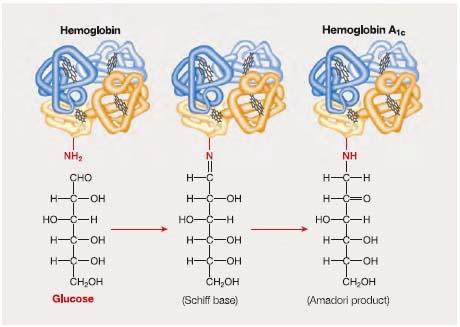
Biochemical findings also help to follow up a disease. In diabetes, glucose attaches to haemoglobin non-enzymatically: the amino group of the protein reacts with the aldehyde of glucose to give a Schiff base, which rearranges to the stable ketoamine (Amadori product), haemoglobin A1c (HbA1c, glycated haemoglobin).

Glycation of haemoglobin: haemoglobin with a free NH2 plus glucose (open chain, CHO) gives the Schiff base (N=CH) and then the Amadori product, haemoglobin A1c (NH-CH2 with a keto group)

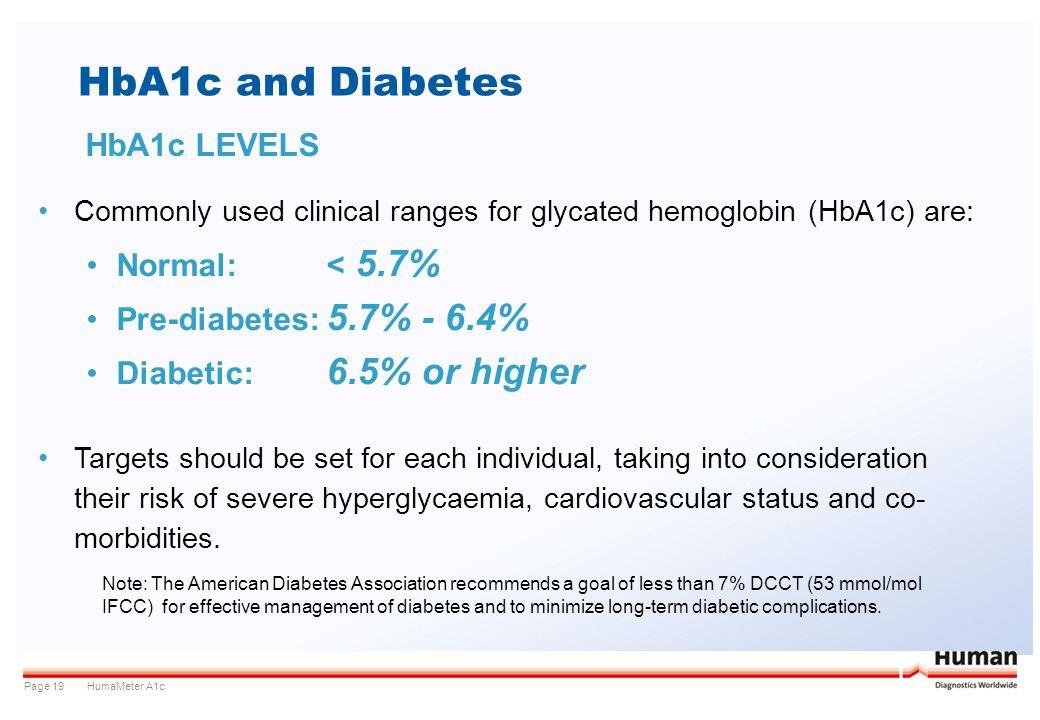
Commonly used clinical ranges for HbA1c are:

CategoryHbA1c
Normalbelow 5.7%
Pre-diabetes5.7% to 6.4%
Diabetic6.5% or higher

Targets should be set for each individual, taking into account the risk of severe hyperglycaemia, cardiovascular status and co-morbidities. The American Diabetes Association recommends a goal of less than 7% DCCT (53 mmol/mol IFCC) for effective management of diabetes and to minimise long-term diabetic complications.

HbA1c and diabetes slide: HbA1c levels, normal below 5.7%, pre-diabetes 5.7% to 6.4%, diabetic 6.5% or higher, individual targets, ADA goal below 7% DCCT (53 mmol/mol IFCC)

Recommended sources

note

  • Websites: themedicalbiochemistrypage.org and biochemistry.mu-sofia.bg/biochemistry.
  • Textbooks: Lippincott's Illustrated Reviews: Biochemistry (5th edition, Harvey and Ferrier), Harper's Illustrated Biochemistry (29th edition, Murray, Bender, Botham, Kennelly, Rodwell and Weil), and Color Atlas of Biochemistry (2nd edition, Koolman and Roehm).

All 106 Biochemistry topics · exam study support, not clinical guidance. SuperMed is not affiliated with the Medical University of Sofia.

Start free. No card needed.

Every account starts free, with Medical Ethics, Urology and Computer Science open in full and free topics in Cytology, Latin Language, Medical Chemistry, Medical Physics, Medical Biology, Anatomy, Biophysics, Medical Psychology, MCS (Disaster Medicine), Physiology, Biochemistry, Social Medicine, Medical Genetics, Pharmacology, Pathophysiology, Microbiology, Internal Medicine, Nephrology, Cardiology, Pulmonology, Gastroenterology, Internal Medicine (Clinical), Obstetrics and Gynecology, Physiotherapy and Rehabilitation, Dental Materials, Preclinics of Prosthetic Dental Medicine, Medical Psychology (Dental Medicine), SMME (Social Medicine & Medical Ethics), Preclinics of Pediatric Dental Medicine, Hygiene and Epidemiology, General Surgery, Preclinics of Conservative Dental Medicine, Preclinics of Oral and Maxillofacial Medicine, Dental Public Health, Dental Prophylaxis, Diagnostic Imaging, Dental Allergology, Dental Implantology, Physiotherapy, Cytology & Histology, Medical Chemistry, Medical Physics, Anatomy I, Biophysics and Medical Biology. Super opens the rest. Super is €14.99 a month.

Create a free account