


Cytology · Year 1 · Medical University of Sofia

32

Endocytosis and exocytosis

Free notes for topic 32 of the Cytology syllabus, open without an account. Written by a senior student against the syllabus question and checked line by line by a second student before publishing. How content is made

Updated

The short version

note

Two opposite processes, both using vesicles.

Endocytosis is the process by which cells absorb molecules from outside the cell by being enclosed within cytoplasmic vesicles. There are three types: phagocytosis, cell eating, for large solid particles; pinocytosis, cell drinking, for liquid substances; and receptor-mediated endocytosis, in which receptor proteins capture a specific target molecule.

Exocytosis is the process in which large molecules move from inside to outside the cell by vesicular transport. It comes in two forms: constitutive, releasing continuously, and regulated, releasing only in response to a signal.
1. Endocytosis

note

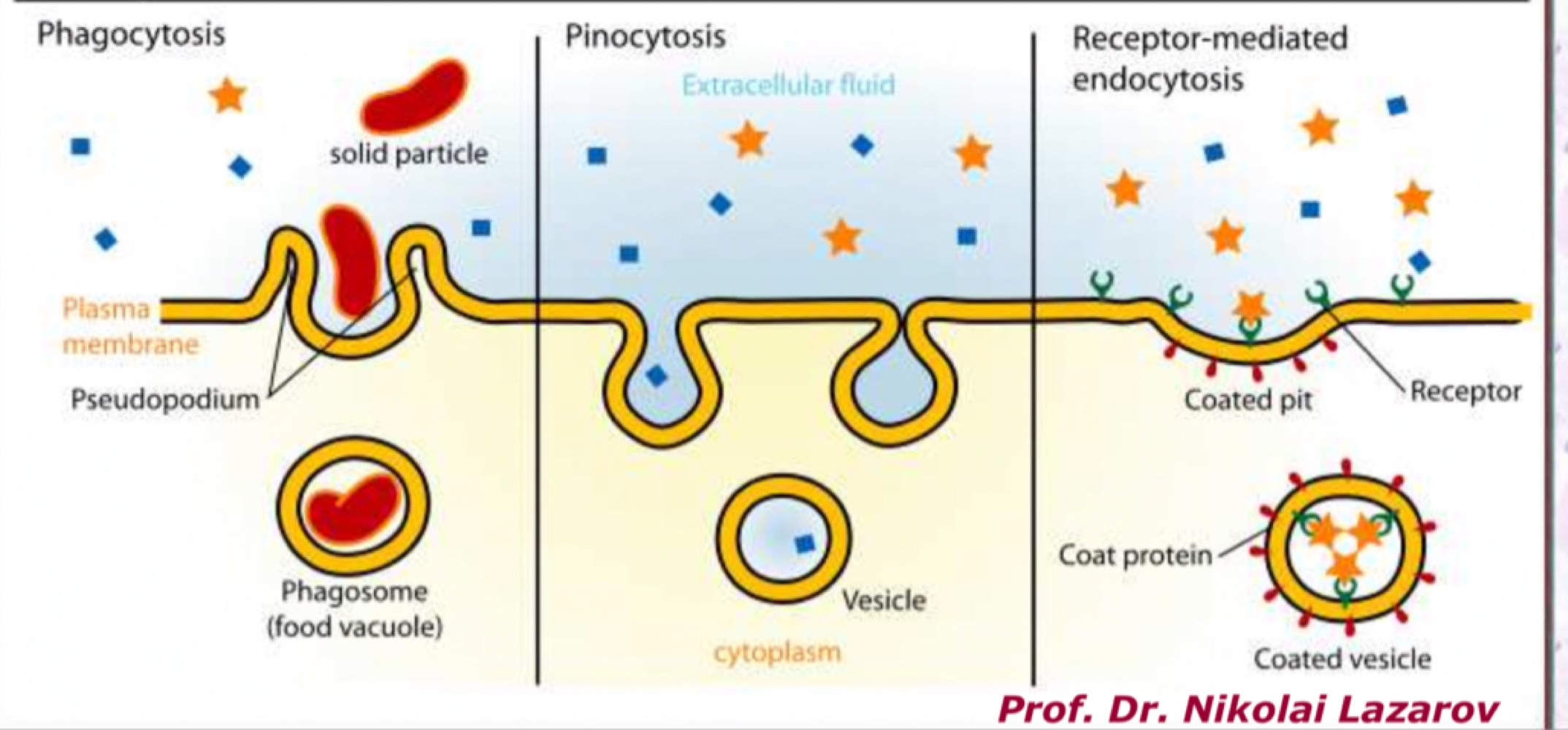
Endocytosis is the process by which cells absorb molecules from outside the cell, by being enclosed within cytoplasmic vesicles.

There are three types.

Diagram comparing phagocytosis, in which a pseudopodium engulfs a solid particle into a phagosome, pinocytosis, in which extracellular fluid is taken into a small vesicle, and receptor-mediated endocytosis at a coated pit

2. Phagocytosis

note

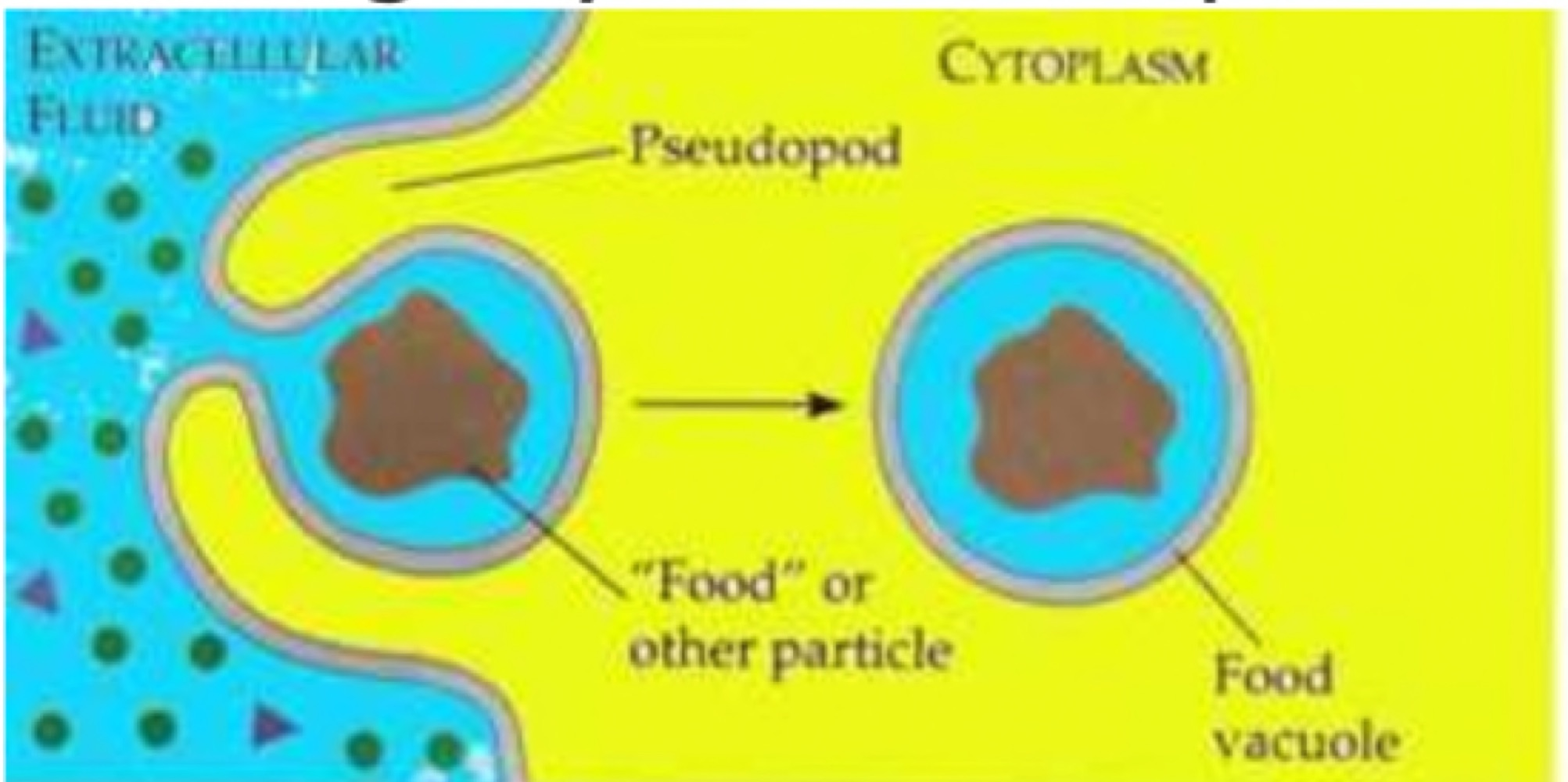
Phagocytosis means cell eating.

It is the process by which cells absorb large solid particles and degrade them: bacteria, protozoa, damaged cells.

The steps:

  • Engulfing the particle by the cell membrane. It gets surrounded by extensions of plasma membrane and cytoplasm.
  • Formation of a phagosome, enclosing the particle, formed by fusion of the particle with the cell membrane.
  • Fusion of the phagosome with lysosomes, for degradation of its content.
Diagram of phagocytosis showing a pseudopod extending around a food or other particle in the extracellular fluid and enclosing it in a food vacuole in the cytoplasm

3. Pinocytosis

note

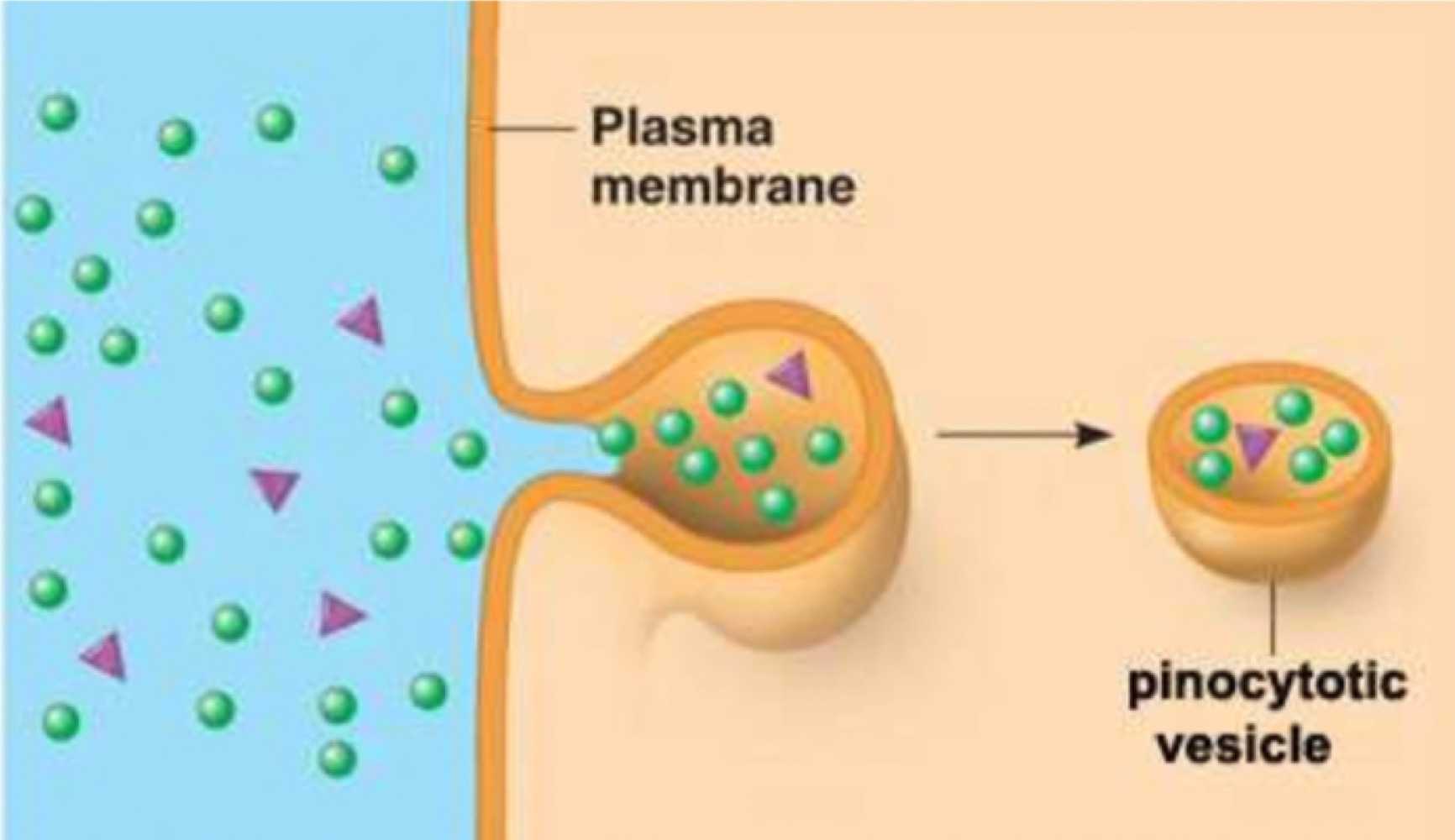
Pinocytosis means cell drinking.

It is the process of taking liquid substances into the cell.

  • It is the absorption of extracellular fluids with all their solutes.
  • There is formation of pinocytic vesicles, the pinosomes, from clathrin coated pits.
  • Pinosomes containing the liquid content move slowly within the cytosol, and either fuse with lysosomes or move to the opposite cell surface to release their content outside the cell. That latter process is called transcytosis.

Transcytosis is worth naming separately. It is not absorption at all: the cell is being used as a route through, which is exactly what an endothelium lining a vessel is for.

Diagram of pinocytosis showing the plasma membrane dimpling inward around extracellular fluid and pinching off as a pinocytotic vesicle

4. Receptor-mediated endocytosis

note

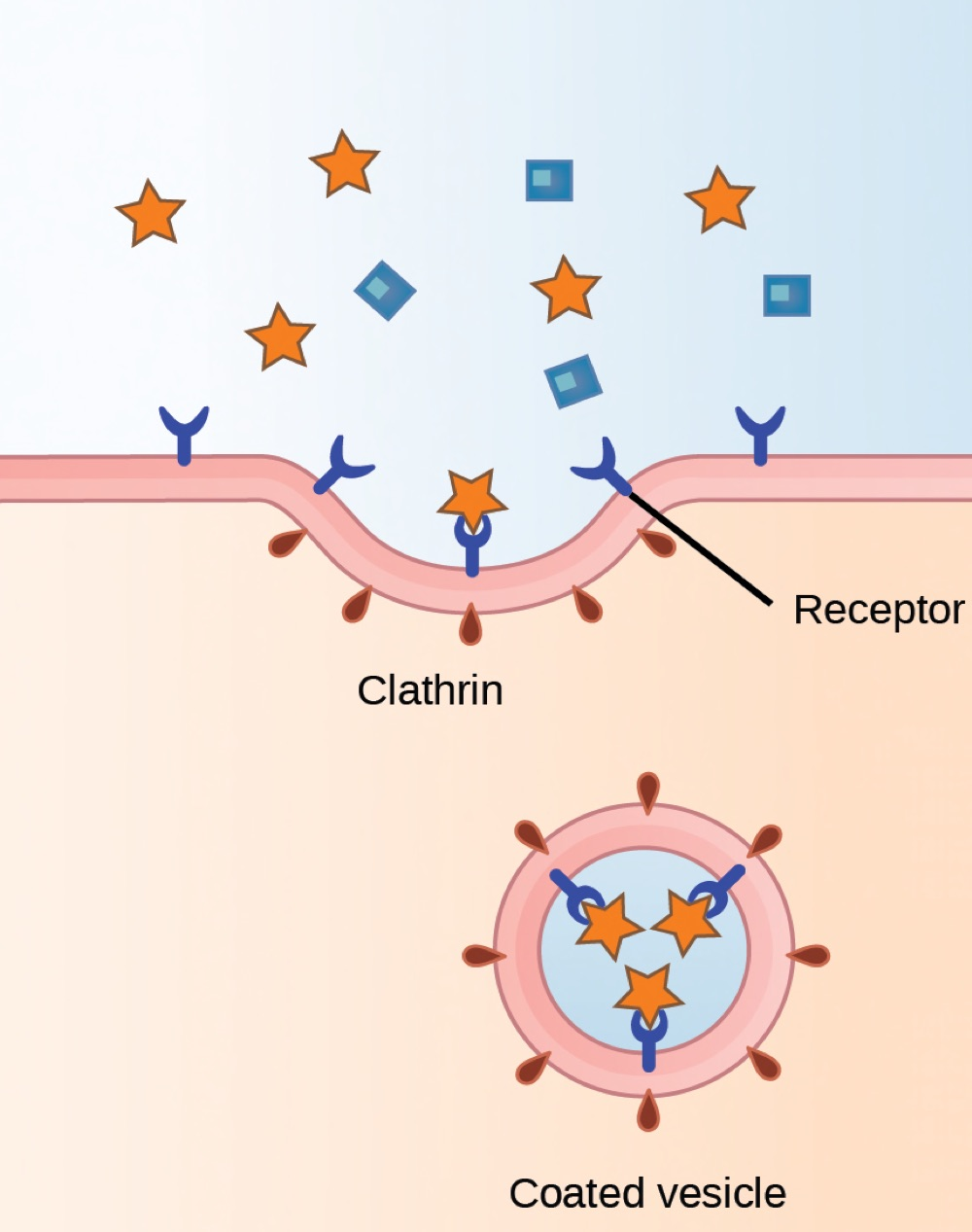
Receptor-mediated endocytosis is the process in which receptor proteins are used to capture the target molecule and become absorbed by the cell.

  • The receptors recognise extracellular molecules and bind to them.
  • This receptor-ligand complex then undergoes endocytosis, becoming a transport vesicle, or coated pit.

The difference from the other two is selectivity. Phagocytosis and pinocytosis take in whatever is there; this takes in what the receptor was looking for.

Diagram of receptor-mediated endocytosis showing receptors binding target molecules at a clathrin-lined region of membrane, which then pinches off as a coated vesicle

5. Exocytosis

note

Exocytosis is the process in which large molecules move from inside to outside the cell by vesicular transport.

A secretory vesicle containing the molecules to be secreted fuses with the plasma membrane, resulting in the release of its content into the extracellular space.

Constitutive secretion

note

In constitutive secretion:

  • Secretory vesicles originate from the trans Golgi network and contain secretory macromolecules such as collagen.
  • They are transported along microtubules to the cell surface and fuse with the plasma membrane.
  • It leads to the continuous release of products.

Regulated secretion

note

In regulated secretion:

  • The secretory vesicle fuses with the plasma membrane and releases neurotransmitters, protein hormones such as insulin, and neuropeptides.
  • It occurs only in response to signals coming to the cell, for example the release of digestive enzymes from pancreatic cells in response to specific stimuli.

The difference is that in regulated exocytosis, secretory material is stably accumulated in secretory vesicles as storage sites and only proceeds when the appropriate stimulus is applied, whereas in constitutive exocytosis the vesicles are continuously released.

All 95 Cytology topics · exam study support, not clinical guidance. SuperMed is not affiliated with the Medical University of Sofia.

Start free. No card needed.

Every account starts free, with free topics in Cytology and Medical Biology. Super opens the rest. Super is €15 a month.

Create a free account