


Summary
note
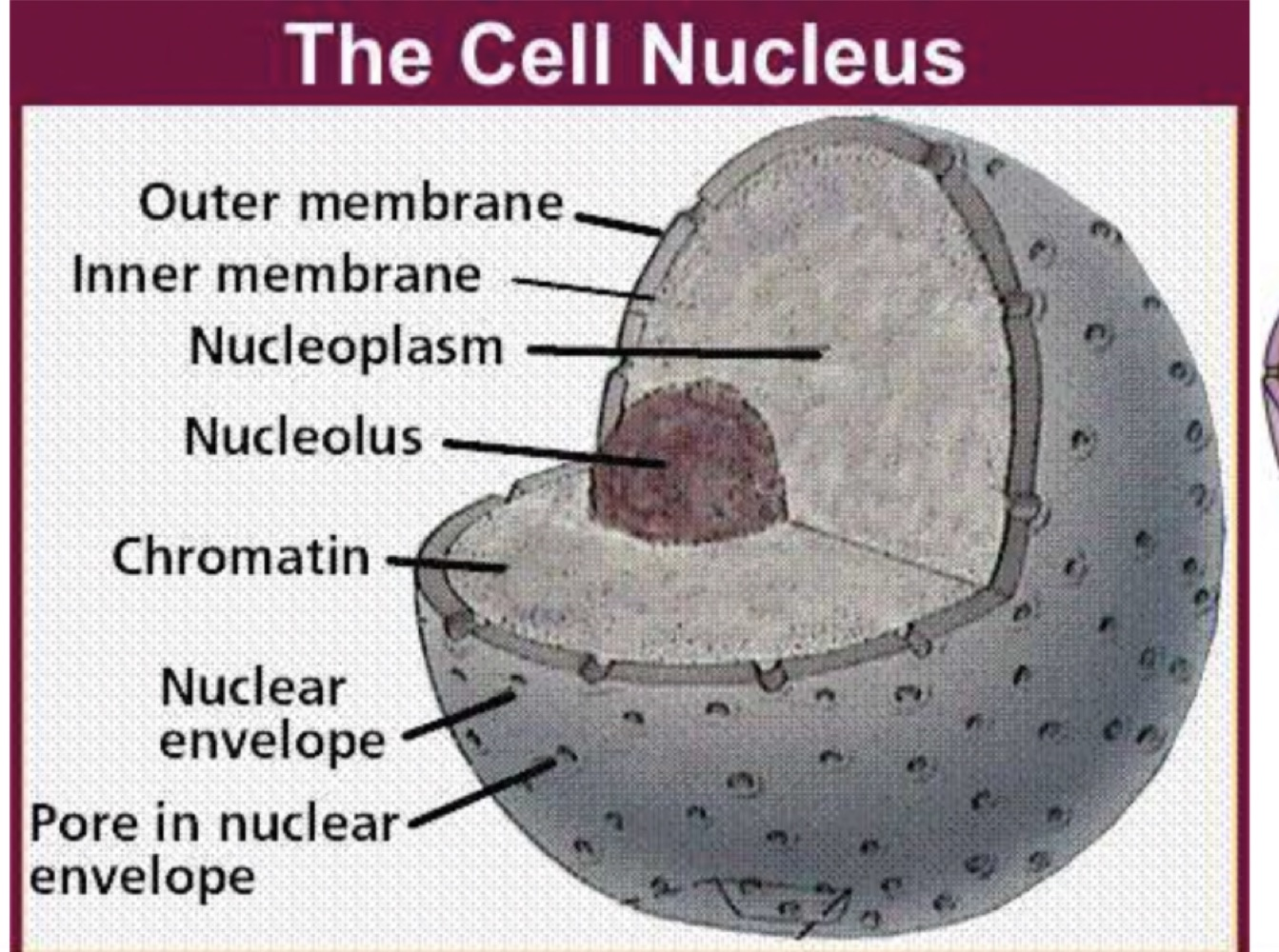
The nucleus is the command centre and genetic material container of the cell, and the organelle of cell division. It is membrane-enclosed and occupies about 10 per cent of cell volume. Its main components are the nuclear envelope, chromatin, nucleolus and nuclear matrix.
The nuclear envelope is a double membrane: an outer membrane of 6 nm, rough, connected with the rER, and an inner membrane of 6 nm, smooth, lined by the nuclear lamina. Between them is the perinuclear space, 10 to 40 nm. The two are connected at the nuclear pore complex.
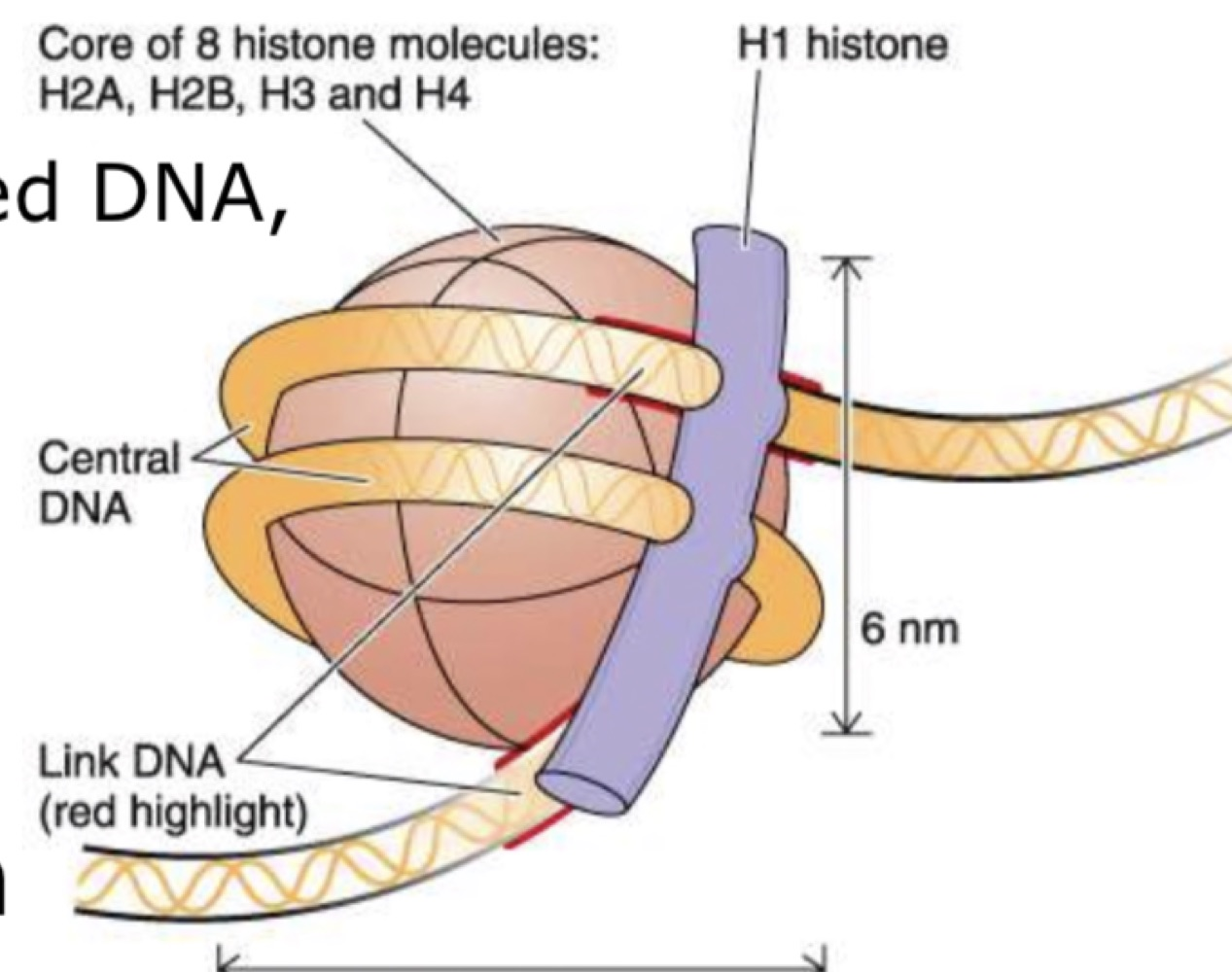
Chromatin is a complex of DNA and associated proteins, the histones. It comes in two types: heterochromatin, condensed and darkly staining, 90 per cent; and euchromatin, extended and lightly staining, the most active portion of the genome.
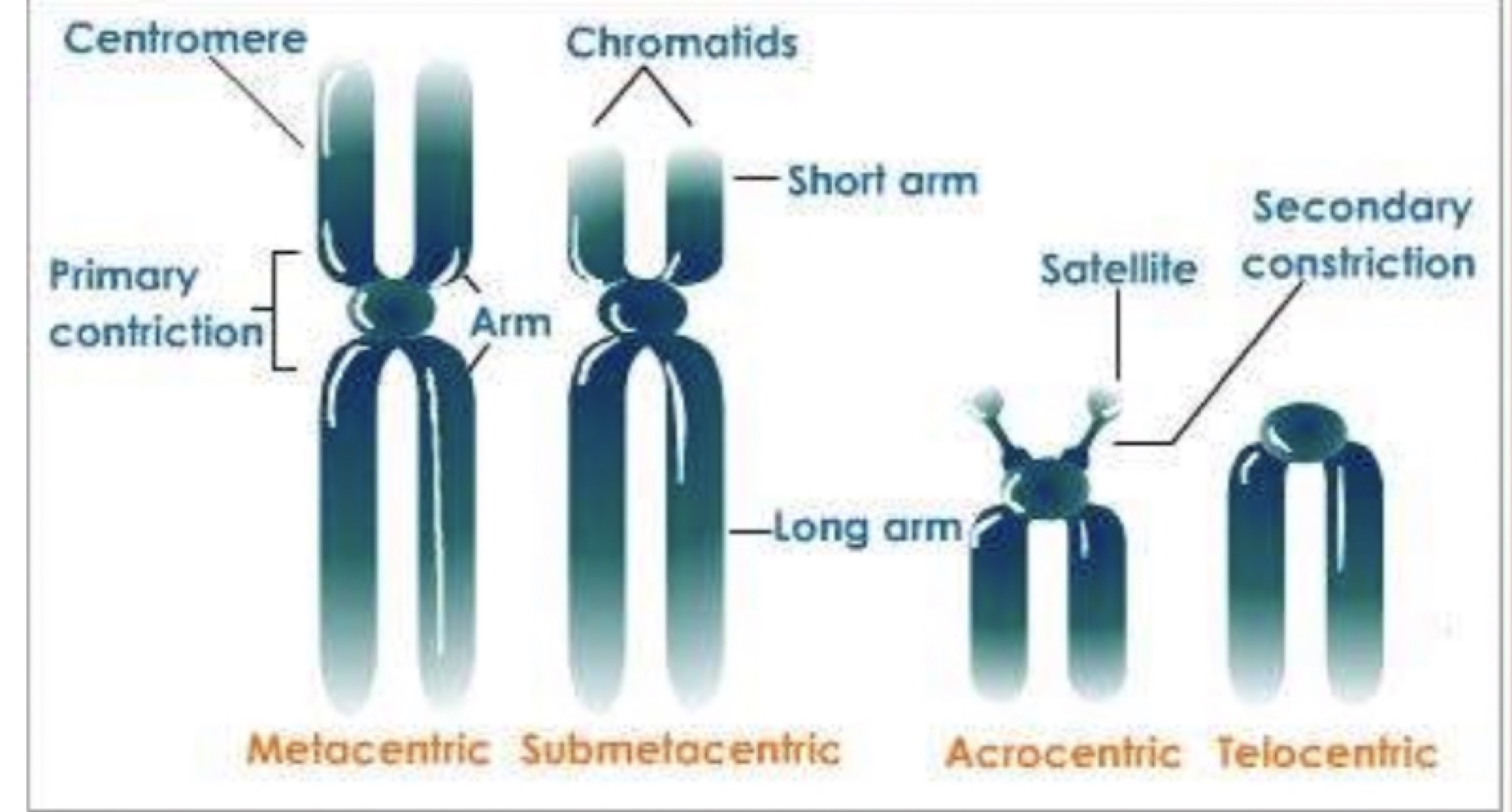
A human cell has 46 chromosomes: 22 pairs of autosomes and 1 pair of sex chromosomes.
The nucleolus is a spherical, highly basophilic structure whose function is producing ribosomes.