



Cytology · Year 1 · Medical University of Sofia

36

Cell differentiation and proliferation. Stem cells

Free notes for topic 36 of the Cytology syllabus, open without an account. Written by a senior student against the syllabus question and checked line by line by a second student before publishing. How content is made

Updated

The short version

note

Cell differentiation is the process in which a cell changes into a specialised type of cell. Unspecialised cells are known as embryonic stem cells and have the ability to become any type of cell. The mechanism is that genes of DNA are switched on and off, so the cell starts making different proteins.

Cell proliferation is the process by which a cell grows and divides to produce two daughter cells. It is a rapid increase in number of cells, and therefore a rapid mechanism of tissue growth, in which cell growth and division occur at the same time. Uncontrolled proliferation is a cause of cancer.

Stem cells are undifferentiated, unspecialised cells that can specialise. Adult stem cells are mostly multipotent; embryonic stem cells are pluripotent.
1. Cell differentiation

note

Cell differentiation is the process in which a cell changes into a specialised type of cell.

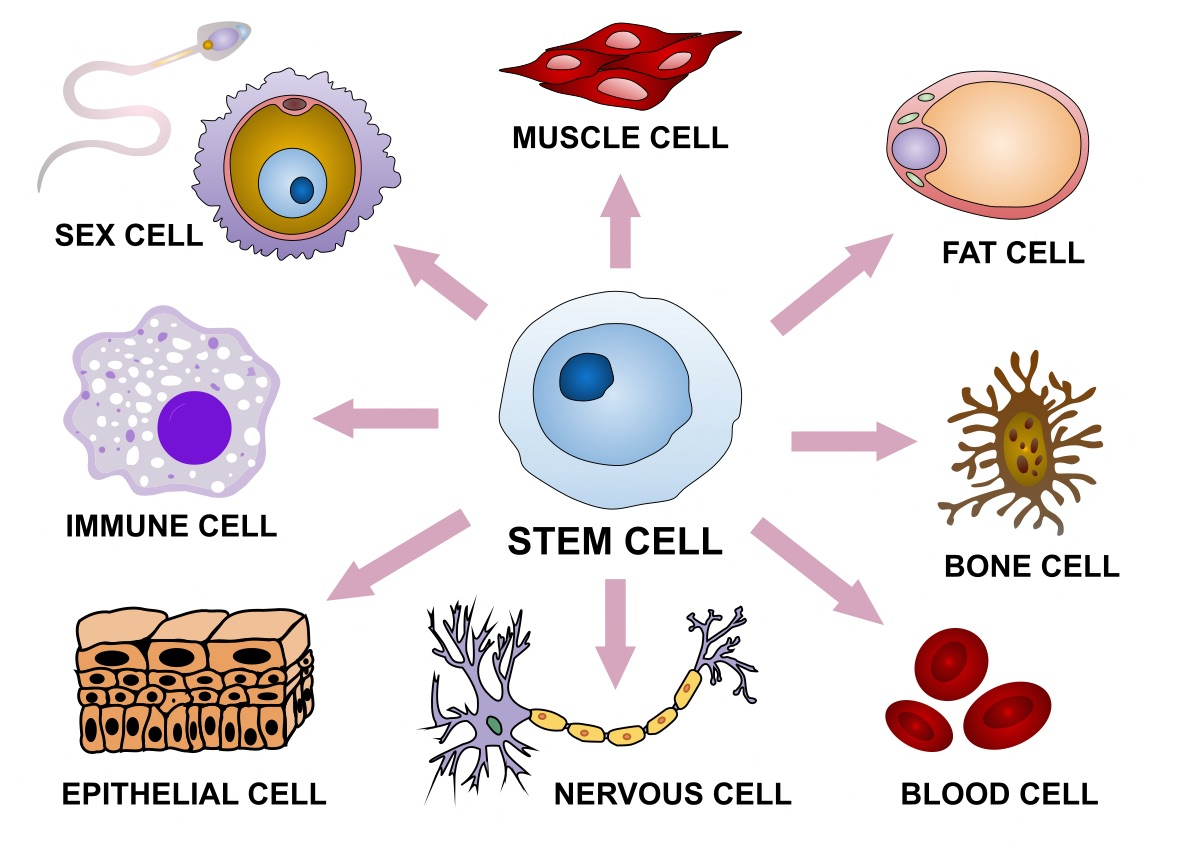
Unspecialised cells are known as embryonic stem cells, and have the ability to become any type of cell, which form different tissues and organs.

How differentiation works

note

Genes of DNA are switched on and off, so the cell starts making different proteins.

For example, the set of genes of red blood cells which are switched on are different from those of muscle cells.

The point worth holding on to is that every cell in the body carries the same DNA. What differs between a red blood cell and a muscle cell is not the genes present but which of them are being read.

Diagram of a stem cell in the centre with arrows to a sex cell, muscle cell, fat cell, bone cell, blood cell, nervous cell, epithelial cell and immune cell

2. Cell proliferation

note

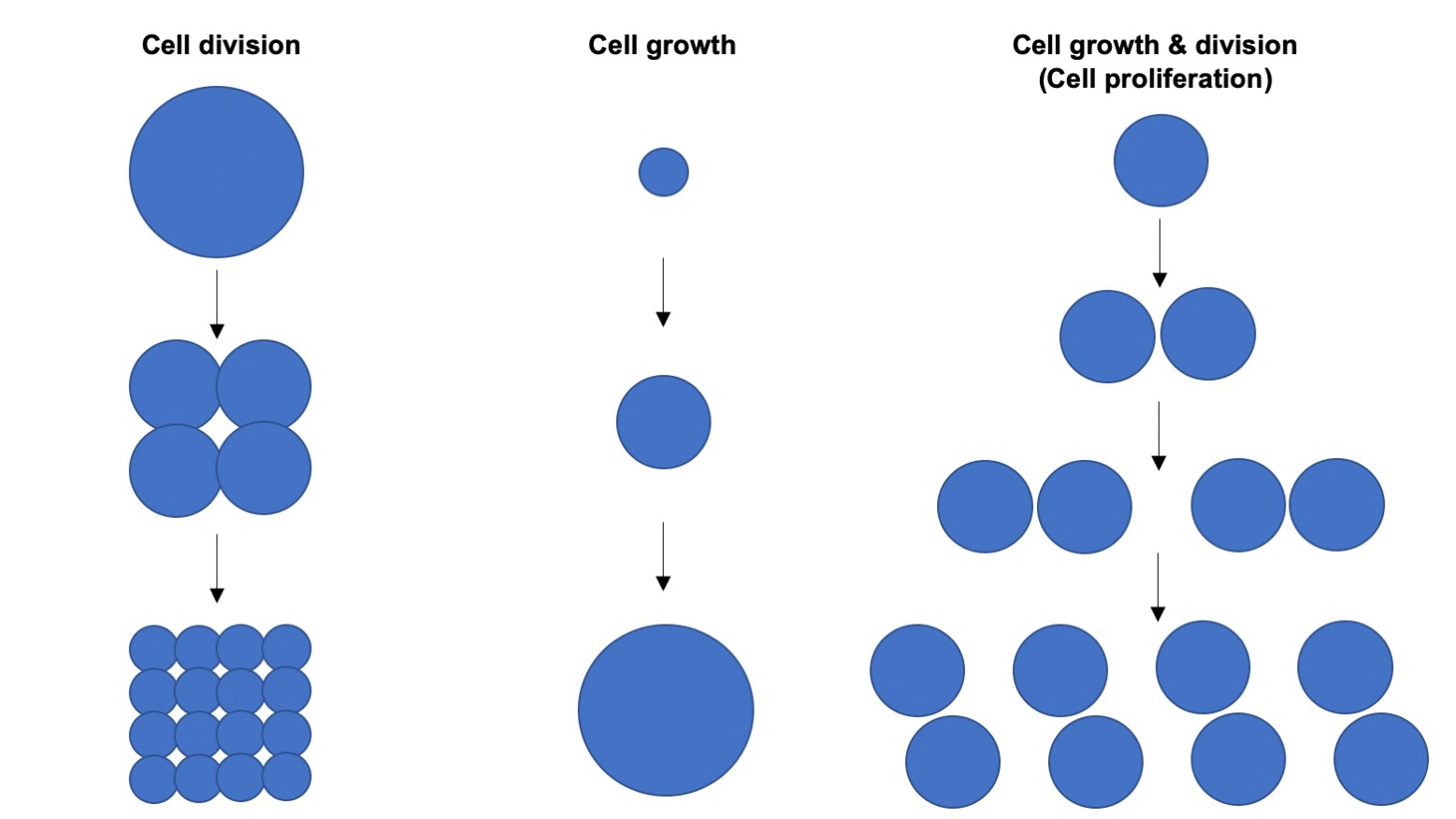
Cell proliferation is the process by which a cell grows and divides to produce two daughter cells.

  • It is a rapid increase in number of cells, and so a rapid mechanism of tissue growth.
  • Cell growth and division occur at the same time.
  • For example, stem cells undergo cell proliferation, which leads to tissue growth.

Uncontrolled proliferation is a cause of cancer.

Diagram contrasting cell division, which increases cell number, cell growth, which increases cell size, and cell proliferation, in which growth and division happen together

3. Stem cells

note

Stem cells are undifferentiated, unspecialised cells that can specialise.

Adult stem cells cannot grow as long and as fast as embryonic cells. They are mostly multipotent, which means capable only of turning into a few kinds of cell.

Embryonic stem cells are pluripotent, which means capable of turning into any kind of cell. They are found inside the human embryo.

The distinction between multipotent and pluripotent is the whole of the difference, and it is a difference of range rather than of kind: both can specialise, but only one can become anything.

All 95 Cytology topics · exam study support, not clinical guidance. SuperMed is not affiliated with the Medical University of Sofia.

Start free. No card needed.

Every account starts free, with free topics in Cytology and Medical Biology. Super opens the rest. Super is €15 a month.

Create a free account