


Summary
note
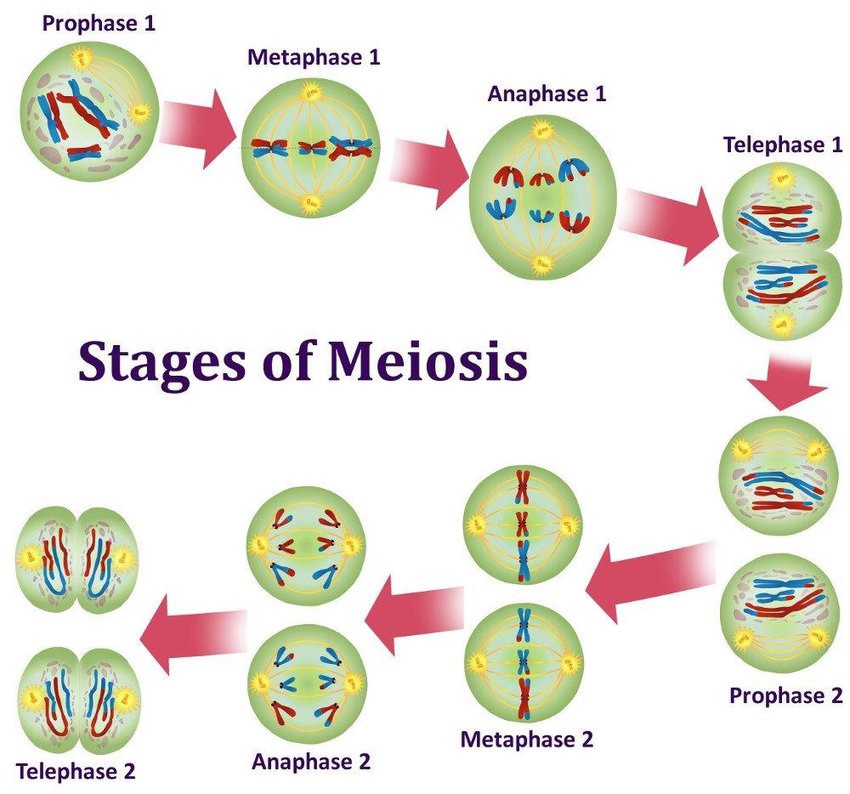
Meiosis is a process involving 2 unique cell divisions: 1 cell becoming 4 cells with half the genetic information. It occurs only in cells that form gametes, the sperm and egg cells.
Its key features are synapsis, the pairing of 2 homologous chromosomes, one from each parent; crossing over, the exchange of genetic material between them; and the haploid result, a diploid mother cell producing 4 haploid daughter cells.
Meiosis I is a reduction in chromosome number. Meiosis II is a reduction in the amount of genetic material, each cell containing 23 chromosomes, and it runs much more rapidly than meiosis I, without S phase.
The comparison with mitosis is the examinable part: mitosis is one division, two diploid cells, genetically identical; meiosis is two divisions, four haploid cells, each genetically unique.