


Cytology · Year 1 · Medical University of Sofia

21

Exocytosis. Secretory vesicles

Free notes for topic 21 of the Cytology syllabus, open without an account. Written by a senior student against the syllabus question and checked line by line by a second student before publishing. How content is made

Updated

The short version

note

Secretory vesicles, or granules, are clathrin-coated vesicles from the Golgi apparatus with a spherical shape, surrounded by a membrane, whose job is the storage and release of secretory products. Zymogen granules release digestive enzymes, neurosecretosomes release hormones, synaptic vesicles release neurotransmitters.

Exocytosis is the process by which large molecules move from inside to outside the cell by vesicular transport. The vesicle fuses with the plasma membrane and its content is released into the extracellular space.

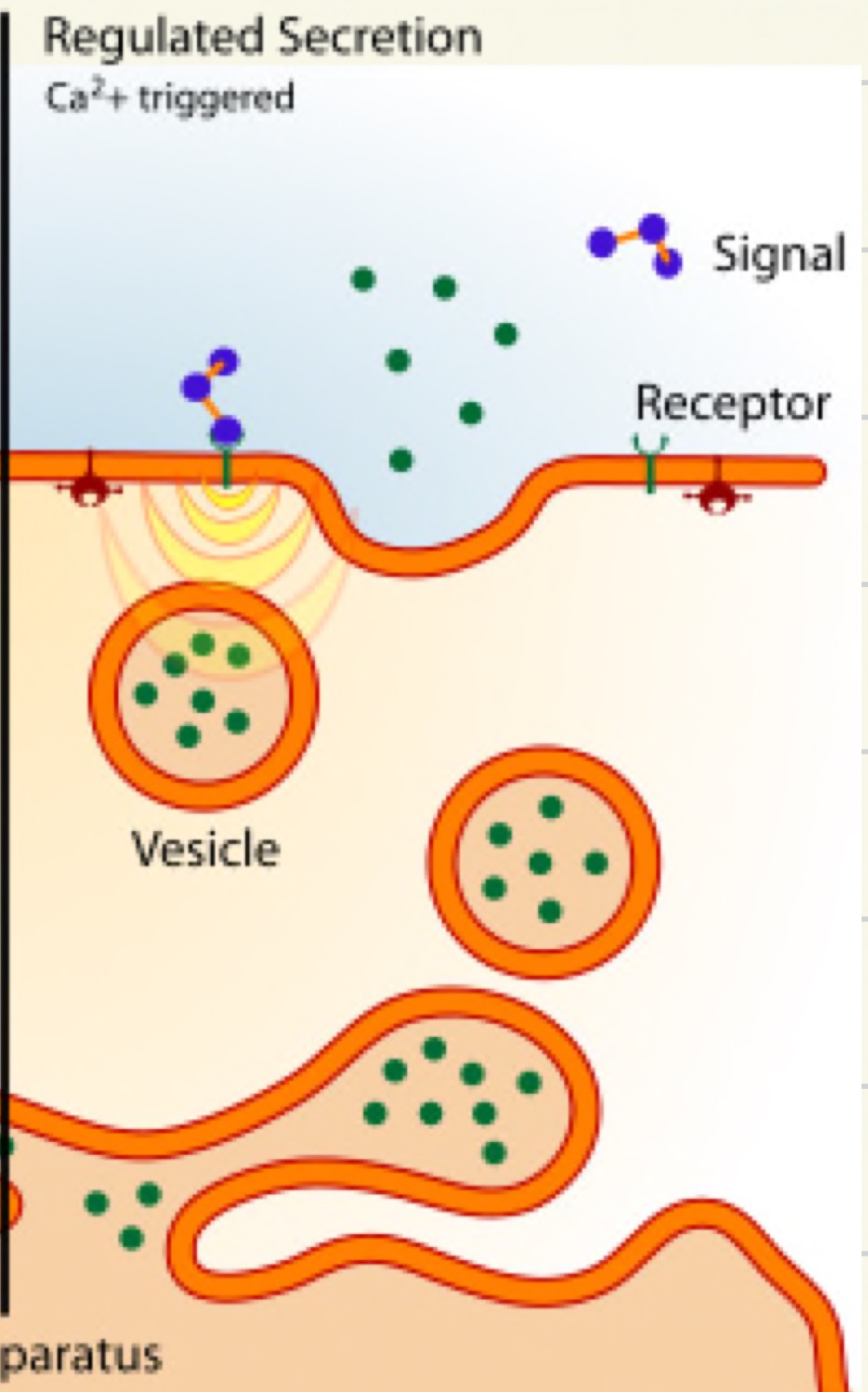
There are two kinds, and the difference is whether anything has to happen first. Constitutive secretion releases products continuously. Regulated secretion occurs only in response to a signal, with the material stably accumulated in vesicles until the stimulus arrives.
1. Secretory vesicles

note

Secretory vesicles, also called granules, are:

  • clathrin-coated vesicles in the Golgi apparatus, with a spherical shape;
  • for the storage and release of secretory products;
  • surrounded by a membrane.

They function as storage compartments for secretory products, and are the main organelles involved in regulated secretion.

The process

note

They come from the Golgi apparatus, contain secretory products such as proteins, and bring them to the cell membrane, where the vesicle docks and fuses with the membrane to release its content out of the cell. That release is exocytosis.

Three examples

note

VesicleReleases
Zymogen granulesDigestive enzymes
NeurosecretosomesHormones
Synaptic vesiclesNeurotransmitters

Synaptic vesicles help transmit signals from one nerve cell to another by releasing or secreting neurotransmitters that activate receptors in the next cell along.

2. Exocytosis

note

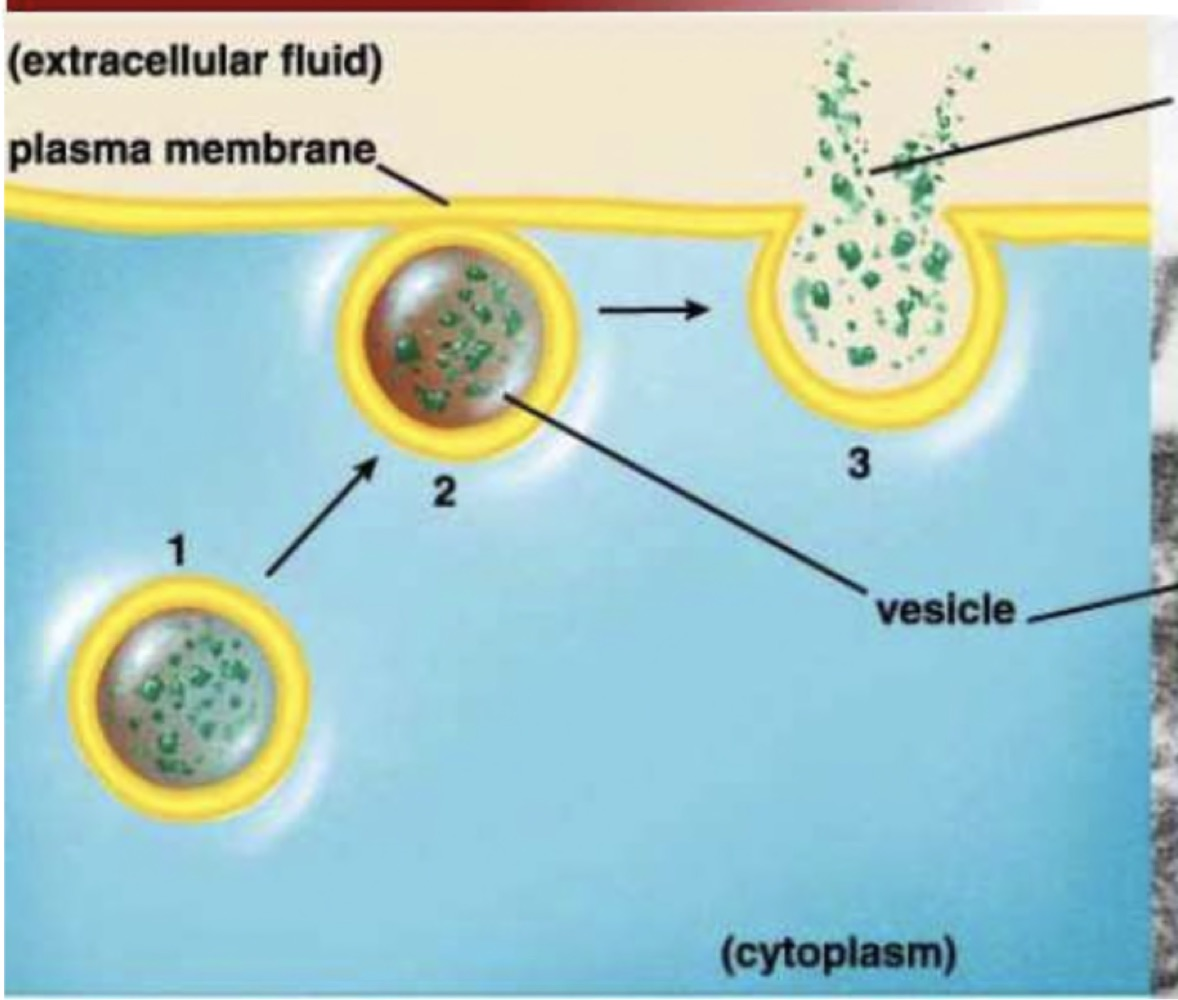
Exocytosis is the process in which large molecules move from inside to outside the cell by vesicular transport.

A secretory vesicle containing the molecules to be secreted fuses with the plasma membrane, resulting in the release of its content into the extracellular space.

Diagram in three stages showing a vesicle in the cytoplasm approaching the plasma membrane, fusing with it, and discharging its contents into the extracellular fluid

3. Constitutive secretion

note

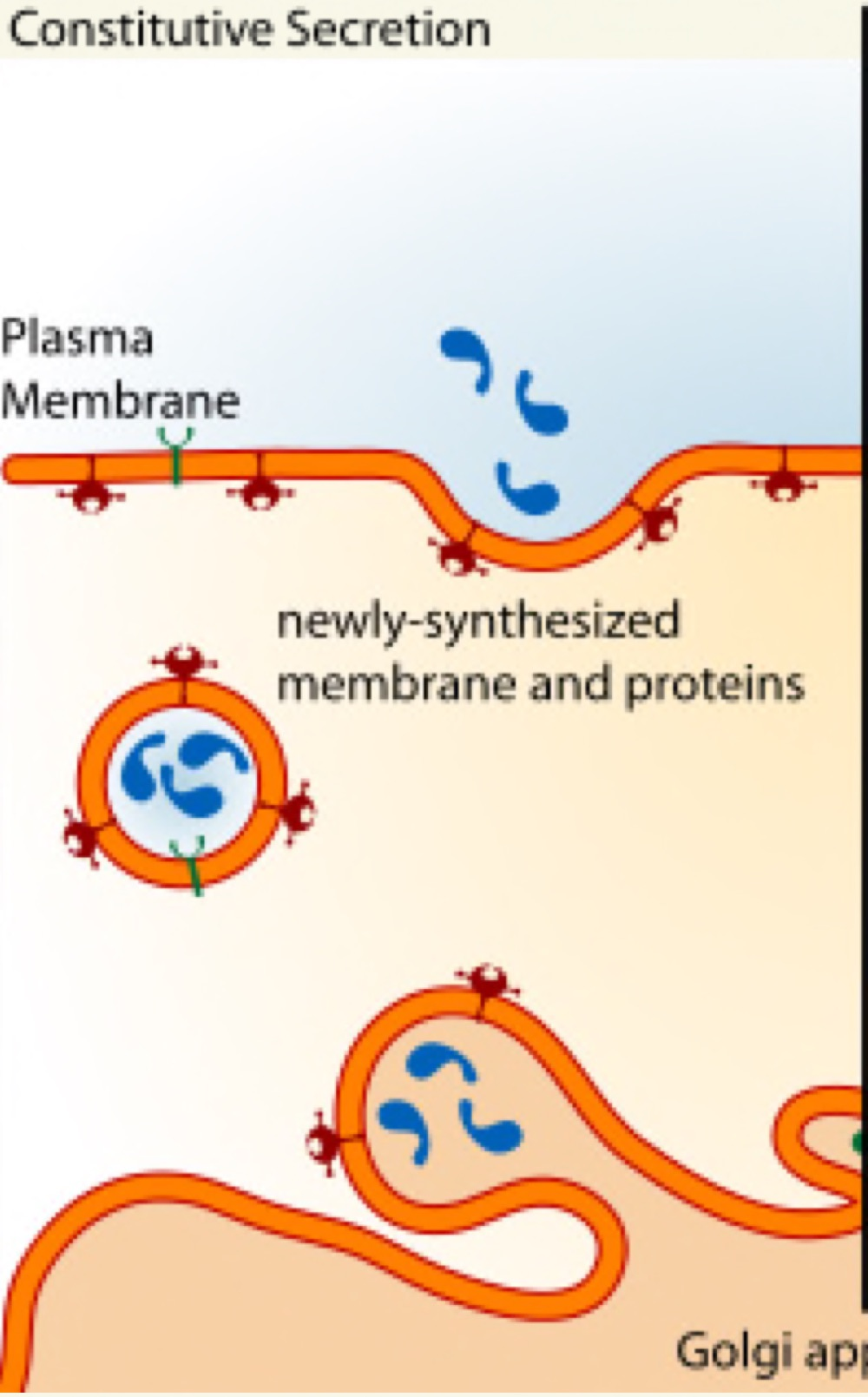
In constitutive secretion:

  • Secretory vesicles originate from the trans Golgi network and contain secretory macromolecules such as collagen.
  • They are transported along microtubules to the cell surface and fuse with the plasma membrane.
  • Constitutive secretion leads to the continuous release of products.
Diagram of constitutive secretion showing newly synthesised membrane and proteins carried from the Golgi apparatus in vesicles that fuse with the plasma membrane

4. Regulated secretion

note

In regulated secretion:

  • The secretory vesicle fuses with the plasma membrane and releases neurotransmitters, protein hormones such as insulin, and neuropeptides.
  • It occurs only in response to signals coming to the cell, for example the release of digestive enzymes from pancreatic cells in response to specific stimuli.
Diagram of regulated secretion showing a signal binding a receptor and triggering calcium-dependent fusion of a stored vesicle with the plasma membrane

The difference between the two

note

In regulated exocytosis, secretory material is stably accumulated in secretory vesicles as storage sites, and release only proceeds when the appropriate stimulus is applied.

In constitutive exocytosis, secretory vesicles are continuously released.

So the vesicles are much the same. What differs is whether they wait.

5. Modes of secretion

note

Three modes are named:

  • merocrine;
  • holocrine;
  • apocrine.

All 95 Cytology topics · exam study support, not clinical guidance. SuperMed is not affiliated with the Medical University of Sofia.

Start free. No card needed.

Every account starts free, with free topics in Cytology and Medical Biology. Super opens the rest. Super is €15 a month.

Create a free account